
This article is for general informational purposes only and does not replace professional veterinary advice; always consult a licensed veterinarian regarding your dog’s specific diet and health needs.
Yes, dogs can eat strawberries, and in most cases, this juicy red fruit is a safe, nutrient-rich treat when served fresh, plain, and in moderation. Strawberries are low in calories and packed with fiber, vitamin C, and antioxidants that can support a dog’s immune system. That said, portion size, preparation, and the form of strawberry (fresh, frozen, dried, or flavored with sugar) all matter a great deal to keep your dog safe.
This guide breaks down exactly how much your dog can eat, which parts of the fruit are fine, which strawberry-flavored products to avoid, and the warning signs that mean it’s time to call your vet.
The Quick Answer: Yes, With a Few Conditions
Dogs are omnivores, and their digestive systems can handle small amounts of fruit without trouble. Strawberries are not on the ASPCA’s toxic plant list, and veterinary nutritionists generally consider them a dog-safe fruit.
However, safety depends on:
- The form — fresh and frozen strawberries are best; sugary or processed strawberry products are not.
- The portion — strawberries should never make up more than 10% of a dog’s daily calorie intake.
- The dog — puppies, senior dogs, diabetic dogs, and dogs with sensitive stomachs need smaller amounts or none at all without veterinary clearance.
Nutritional Benefits of Strawberries for Dogs
Strawberries offer more than just a sweet flavor dogs tend to love. According to veterinary health experts, this fruit contains several compounds that genuinely benefit canine health when fed correctly.
- Vitamin C — supports immune function, though healthy dogs already produce their own supply.
- Fiber — aids digestion and helps regulate bowel movements.
- Manganese and potassium — support bone health, muscle function, and fluid balance.
- Antioxidants — help combat cellular damage and may support healthy aging.
- Low calorie count — makes strawberries a smarter treat option than many commercial dog biscuits.
- High water content — helps with hydration, especially in warmer months.
Some veterinarians also note that the malic acid in strawberries has mild, natural teeth-whitening properties, though it should never replace regular dental care or brushing.

Strawberry Nutrition & Safety Data Table
The table below summarizes key facts dog owners search for most, including nutritional values and safety across different strawberry forms.
| Category | Details (Per 100g Fresh Strawberries) | Dog Safety Level |
|---|---|---|
| Calories | ~32 kcal | Safe in small servings |
| Sugar | ~4.9g | Moderate — limit for diabetic/overweight dogs |
| Fiber | ~2g | Beneficial for digestion |
| Vitamin C | ~59mg | Safe, generally unnecessary but harmless |
| Water content | ~91% | Helps with hydration |
| Fresh strawberries | Whole or sliced | ✅ Safe |
| Frozen strawberries | Thawed or as a cold treat | ✅ Safe |
| Freeze-dried strawberries | Plain, no additives | ✅ Safe in small amounts |
| Dried strawberries | Sugar-concentrated | ⚠️ Feed sparingly |
| Strawberry tops/leaves | Washed, chopped | ✅ Safe, non-toxic |
| Strawberry stems | Fibrous, tough | ⚠️ Remove before feeding |
| Wild strawberries (true species) | Small amounts | ✅ Safe if correctly identified |
| Strawberry yogurt (plain, xylitol-free) | Small spoonful | ⚠️ Conditional |
| Strawberry jam, jelly, or preserves | High sugar | ❌ Avoid |
| Strawberry ice cream | Dairy + sugar | ❌ Avoid |
| Strawberry cake, pop tarts, cream cheese | Processed, artificial | ❌ Avoid |
Can Dogs Eat Strawberry Tops, Leaves, and Stems?
This is one of the most common questions dog owners ask, and the short answer is reassuring: strawberry tops and leaves are not toxic to dogs. Unlike the leaves of tomato or rhubarb plants, strawberry foliage does not contain harmful compounds in meaningful amounts.
That said, a few practical points matter:
- Leaves and tops can be fed in small, chopped amounts, but they offer little nutritional value and are mostly fibrous filler.
- Stems are tougher and harder to digest; removing them before feeding lowers choking risk, especially in small breeds.
- Always wash strawberries thoroughly before feeding any part, since pesticide residue on the outer skin and leaves is a real concern with commercially grown berries.
If your dog swallows a stray strawberry top while snacking in the garden, there is generally no cause for alarm. Repeated or large-quantity consumption of stems, however, can lead to mild digestive upset or a choking hazard in toy breeds.
How to Safely Prepare Strawberries for Your Dog
Preparation changes everything when it comes to fruit safety. Follow these steps before offering strawberries to a dog for the first time:
- Wash thoroughly under running water to remove dirt, pesticides, and bacteria.
- Remove the green top and stem, particularly for small or brachycephalic (flat-faced) breeds prone to choking.
- Slice or mash the strawberry, especially for puppies, senior dogs, or small breeds. Whole strawberries pose a higher choking risk than sliced pieces.
- Start with a tiny piece to test for allergic reactions before offering a full serving.
- Serve plain — no sugar, whipped cream, chocolate, or syrup added.
Fresh vs. Frozen vs. Freeze-Dried vs. Dried
- Fresh strawberries are the gold standard: highest water content, natural sugar levels, and easiest to portion.
- Frozen strawberries make an excellent warm-weather treat and can help soothe teething puppies, but should be cut into manageable pieces to avoid a tooth or choking injury from a rock-hard frozen chunk.
- Freeze-dried strawberries are safe in small quantities since the freeze-drying process removes water but keeps nutrients intact; check labels for zero added sugar or preservatives.
- Dried strawberries are more concentrated in sugar per bite than fresh fruit, since removing water shrinks the serving size while keeping the sugar content the same. Feed only tiny amounts occasionally.
How Many Strawberries Can a Dog Eat?
Portion size depends heavily on body weight. Veterinary nutritionists generally recommend the 10% treat rule: treats, including fruit, should never exceed 10% of a dog’s total daily caloric intake.
| Dog Size (Approx. Weight) | Recommended Serving | Frequency |
|---|---|---|
| Small (under 10 kg / 22 lbs) | 1–2 sliced strawberries | 1–2 times per week |
| Medium (10–25 kg / 22–55 lbs) | 2–4 sliced strawberries | 2–3 times per week |
| Large (25 kg+ / 55 lbs+) | 4–6 sliced strawberries | 2–3 times per week |
| Puppies | 1 small piece, mashed | Occasionally, after 8+ weeks |
| Senior or diabetic dogs | Vet-approved amount only | As directed by a veterinarian |
Feeding strawberries daily in large quantities is not advisable even for large breeds. Fruit sugar adds up quickly, and overfeeding can contribute to loose stools, weight gain, or blood sugar spikes in sensitive dogs.

What About Strawberry-Flavored Human Foods?
Owners frequently wonder whether a spoonful of a favorite snack is safe to share. In most cases, the answer is no, and here’s why each product carries risk:
- Strawberry yogurt: Only plain, unsweetened, xylitol-free yogurt in small amounts is acceptable. Flavored yogurts often contain added sugar or artificial sweeteners that can be harmful.
- Strawberry ice cream: A poor choice. It combines high sugar, dairy fat that many dogs digest poorly, and sometimes chocolate swirl or xylitol-based “sugar-free” versions, which are genuinely dangerous.
- Strawberry jam, jelly, and preserves: These are concentrated sugar syrups, occasionally sweetened with xylitol. Both plain sugar overload and xylitol toxicity make these unsafe.
- Strawberry applesauce: Only safe if it is a plain, unsweetened, single-ingredient product with no added sugar or spices like nutmeg.
- Strawberry cream cheese, cake, and pop tarts: These are ultra-processed, high in fat and refined sugar, and often contain ingredients like chocolate or artificial sweeteners that offer no benefit and real risk.
As a simple rule: if a strawberry product has an ingredient list longer than “strawberries,” treat it with caution and check every ingredient for xylitol, chocolate, or excessive added sugar before sharing.
Wild Strawberries and Look-Alikes
True wild strawberries (Fragaria vesca) are non-toxic and safe for dogs in small amounts, similar to cultivated strawberries. However, a common lawn plant called “mock strawberry” (Potentilla indica) closely resembles wild strawberries but produces a bland, less nutritious berry. Mock strawberry is not considered toxic, but it offers little value and can cause mild stomach upset if a dog eats a large quantity during an outdoor walk.
If your dog frequently grazes on unknown berries during walks or backyard time, it’s worth learning to identify the plants growing in your yard to prevent accidental ingestion of a genuinely toxic look-alike species.
Mixing Strawberries With Other Fruits
Combining fruits is common in homemade dog treats and smoothies, and most fruit pairings are safe when fed in moderation.
- Strawberries and bananas: A safe, popular combination; both are low-toxicity, fiber-rich fruits, though the combined sugar content means smaller portions are wise.
- Strawberries and watermelon: Also generally safe, provided seeds and rind are removed from the watermelon first, since both can cause intestinal blockage.
Avoid mixing strawberries with grapes, raisins, or any dish containing chocolate, xylitol, or macadamia nuts, all of which are genuinely toxic to dogs regardless of the amount.
Potential Risks and Side Effects
Even a generally safe fruit carries some risk when mismanaged. Watch for the following:
- Choking hazard: Whole strawberries, especially with the stem attached, pose a risk to small breeds and puppies.
- Digestive upset: Diarrhea, vomiting, or gas can occur if a dog eats too many strawberries at once.
- Blood sugar spikes: Diabetic dogs or those prone to obesity should have strawberries limited or removed entirely under veterinary guidance.
- Allergic reactions: Rare, but possible. Symptoms include itching, swelling, or hives after eating a new fruit.
- Pesticide exposure: Non-organic strawberries can carry pesticide residue; washing thoroughly reduces this risk significantly.
Signs You Should Call Your Veterinarian
Contact a veterinarian promptly if a dog shows any of the following after eating strawberries or a strawberry product:
- Persistent vomiting or diarrhea lasting more than 24 hours
- Visible difficulty breathing, swelling of the face, or hives
- Lethargy, weakness, or collapse (especially after xylitol exposure)
- Signs of a blockage, such as straining, bloating, or refusal to eat
Xylitol poisoning is a genuine emergency. If a dog has eaten a strawberry-flavored product containing this sweetener, contact an emergency vet or a pet poison hotline immediately rather than waiting for symptoms to appear.
Step-by-Step: Introducing Strawberries to Your Dog’s Diet
- Choose fresh, ripe, organic strawberries when possible.
- Wash and remove the green top and stem.
- Cut a small piece and offer it as a test.
- Wait 24 hours and monitor for any stomach upset or allergic reaction.
- If no issues appear, gradually introduce the recommended serving size based on body weight.
- Keep strawberries as an occasional treat, not a daily staple.
Final Feeding Guidelines
Strawberries earn their reputation as a dog-safe superfruit when served the right way: fresh, plain, washed, and portioned according to body size. Skip anything sugary, artificially sweetened, or heavily processed, and always check with a veterinarian before introducing new foods to puppies, senior dogs, or dogs managing a medical condition like diabetes or pancreatitis.
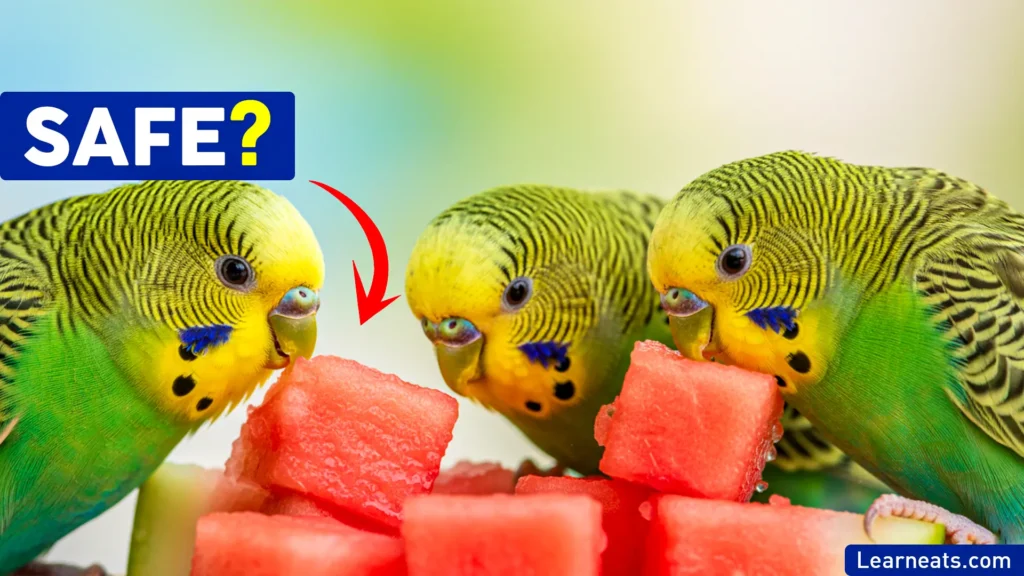
Did you know that? Can Parakeets Eat Watermelon?
Frequently Asked Questions
1. Can dogs eat strawberry tops?
Yes, strawberry tops are non-toxic and safe in small, chopped amounts. They offer little nutritional value and are mostly fibrous, so removing them is optional but recommended for small breeds to reduce choking risk.
2. Can dogs eat strawberry leaves?
Strawberry leaves are not poisonous to dogs and are generally safe if a dog eats a small amount. Large quantities may cause mild stomach upset, so occasional exposure is fine but not encouraged as a regular snack.
3. Can dogs eat frozen strawberries?
Yes, frozen strawberries make a refreshing summer treat, especially cut into smaller pieces first. Whole frozen berries can be hard enough to risk a chipped tooth or choking, so slicing beforehand is safer.
4. Can dogs eat freeze-dried strawberries?
Freeze-dried strawberries are safe in small amounts as long as they contain no added sugar, chocolate coating, or preservatives. Check the ingredient label carefully before offering them as a treat.
5. Can dogs eat strawberry yogurt?
Only plain, unsweetened, xylitol-free yogurt in a small spoonful is considered safe. Flavored or sweetened strawberry yogurt often contains added sugar or artificial sweeteners that can upset a dog’s stomach or, in the case of xylitol, cause serious poisoning.
6. How many strawberries can a dog eat per day?
A small dog can typically handle 1–2 sliced strawberries a few times a week, while a large dog may tolerate up to 4–6. Strawberries should stay within the 10% daily treat allowance and should not become an everyday habit.
7. Can dogs eat wild strawberries?
True wild strawberries are non-toxic and safe in small amounts, similar to store-bought varieties. Owners should be cautious of look-alike plants like mock strawberry, which is not toxic but offers minimal nutritional benefit.
8. Can puppies eat strawberries?
Puppies over eight weeks old can eat a small, mashed piece of strawberry as an occasional treat. Portions should be much smaller than for adult dogs, and new foods should always be introduced gradually.
9. Can dogs eat strawberry ice cream?
No, strawberry ice cream should be avoided due to its high sugar and dairy fat content, which many dogs digest poorly. Some “sugar-free” versions also contain xylitol, a substance that is highly toxic to dogs.
10. Can dogs eat strawberries and bananas together?
Yes, strawberries and bananas are a safe fruit combination for dogs when fed in moderate portions. Both are low in toxicity, though their combined natural sugar content means smaller servings are recommended for weight-conscious dogs.
11. Can dogs eat strawberry jam or jelly?
No, strawberry jam, jelly, and preserves are not recommended because they are high in refined sugar and sometimes contain xylitol. Both ingredients can cause digestive upset or, in the case of xylitol, a medical emergency.
12. Are strawberries safe for diabetic or overweight dogs?
Strawberries contain natural sugar that can affect blood glucose levels, so diabetic or overweight dogs should only eat them under direct veterinary guidance. A vet can determine whether a small, infrequent portion fits safely into the dog’s specific health plan.