
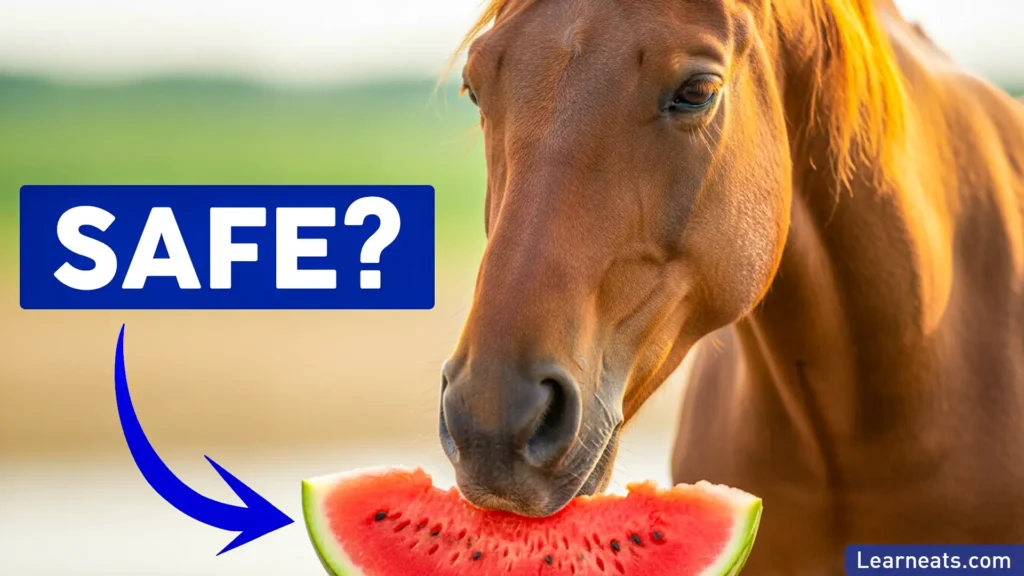
Picture your horse munching on a sweet, juicy treat during a sunny stable day sounds delightful, right? Many owners ask, “Can a horse eat watermelon?” or simply “Can horses eat watermelon?” The short answer is yes, but understanding if watermelon is safe for horses ensures no mishaps.
At LearnEats.com, we’re your trusted source for equine nutrition tips, providing practical advice to keep your equine companion thriving. Watermelon can be a fun, occasional addition to a horse’s forage-heavy diet, offering a burst of moisture that’s especially welcome in warmer months.
We’ll cover everything from its hydrating appeal to safe serving methods, helping you decide if it’s right for your horse. Whether you’re dealing with a picky eater or just spoiling your buddy, this guide draws on holistic insights for balanced feeding.
Dive in to make informed choices that enhance your horse’s health and happiness without risks.
Is Watermelon Safe for Horses?
Watermelon is generally safe for horses, making it a popular summer treat among equine enthusiasts. The flesh is non-toxic and can be fed without worry to most healthy horses, as long as it’s in small quantities. Can horses eat watermelon? Absolutely, but it’s not a core part of their diet horses are herbivores focused on hay, grass, and grains.

Can a horse eat watermelon without issues? For the average adult horse, yes, but foals or those with health conditions like insulin resistance might need vet clearance first. This aligns with equine nutrition tips that emphasize variety in moderation to prevent boredom in feeding routines.
Benefits of Watermelon for Horses
As a horse-friendly fruit, watermelon packs a punch with its high water content over 90% aiding hydration during hot weather or after workouts. It’s a natural way to encourage fluid intake when plain water isn’t enticing.
Loaded with vitamins A and C, it supports eye health, immune function, and wound healing. Potassium helps muscle recovery, while the low-calorie nature prevents unwanted weight gain. Lycopene adds antioxidant benefits, potentially reducing inflammation after exertion.
In equine nutrition tips, such treats boost morale, strengthening the bond between horse and owner. The benefits of watermelon for horses extend to fiber content, promoting gentle digestion without overloading the system.
Risks of Feeding Watermelon to Horses
While appealing, there are risks of feeding watermelon to horses to consider. The seeds, though small, could pose a choking hazard if gulped down whole, especially in eager eaters. Overfeeding the sugary flesh might lead to colic or loose manure in sensitive horses.
Can horses eat watermelon rind? Yes, but it’s tougher and less digestible, risking blockages if not chopped finely. Can horses eat watermelon rinds without prep? Not recommended large pieces can cause esophageal obstruction or gut upset.
High sugar levels aren’t ideal for horses prone to laminitis. Always introduce slowly to monitor for allergies or tummy troubles, keeping treats under 10% of daily intake.

Tips for Safely Preparing Watermelon as a Horse-Friendly Fruit
Want to treat your horse right? Here’s how to prep watermelon safely:
- Clean and Cut: Wash the exterior thoroughly to remove dirt or chemicals. Slice the flesh into manageable chunks, removing most seeds for caution.
- Handle the Rind: If offering rind, dice it into small strips to ease chewing and digestion great for teething foals or as a boredom buster.
- Portion Control: Start with a handful per session, once or twice weekly. For a 1,000-pound horse, limit to half a small melon max.
- Mix It Up: Blend with hay or carrots for a salad-like treat, adding nutrients without excess.
- Observe Closely: Feed in a calm setting and watch for reactions. Adjust based on age, activity, and health.
These equine nutrition tips turn watermelon into a rewarding, risk-free delight for your horse.
Final Words
In conclusion, safe equine nutrition tips are vital for your horse’s vitality and performance. The benefits of watermelon for horses, like added hydration and vitamins, make it an enjoyable option, but the risks of feeding watermelon to horses such as choking or digestive disruptions underscore the need for care.
At LearnEats.com, explore more horse-friendly fruits to enrich your feeding strategy. Always prioritize balance, consulting vets for custom advice. With thoughtful treats, you’ll support a strong, content horse ready for adventures. Check our resources for ongoing guidance!
Is It Safe for Pregnant Women to Eat Watermelon? | LearnEats
Frequently Asked Questions
Can horses eat watermelon?
Yes, horses can eat watermelon flesh as an occasional treat, supporting equine nutrition tips with moderation.
Is watermelon safe for horses?
Watermelon is safe for most horses when fed properly, offering hydration as a horse-friendly fruit.
What are the benefits of watermelon for horses?
Benefits include high water content for hydration, vitamins A and C, and a low-calorie refreshment per equine nutrition tips.
Are there risks of feeding watermelon to horses?
Risks involve potential choking on seeds or rind, plus digestive issues from overfeeding heed equine nutrition tips.
Can horses eat watermelon seeds?
Watermelon seeds are generally safe but remove them to avoid choking in horses.
Can horses eat watermelon rind?
Horses can eat watermelon rind if chopped small, but it’s fibrous and may cause blockages otherwise.
What horse-friendly fruits are alternatives to watermelon?
Safe horse-friendly fruits include apples, pears, and bananas in moderation for varied equine nutrition tips.
How much watermelon can a horse eat?
Limit to small portions, like a few chunks weekly, to maintain balance in equine nutrition tips.
What if my horse overeats watermelon?
Overeating may cause colic; monitor and contact a vet if symptoms appear, following equine nutrition tips.
Can foals eat watermelon?
Foals can try small, soft pieces of watermelon, but prioritize milk and forage for growth.