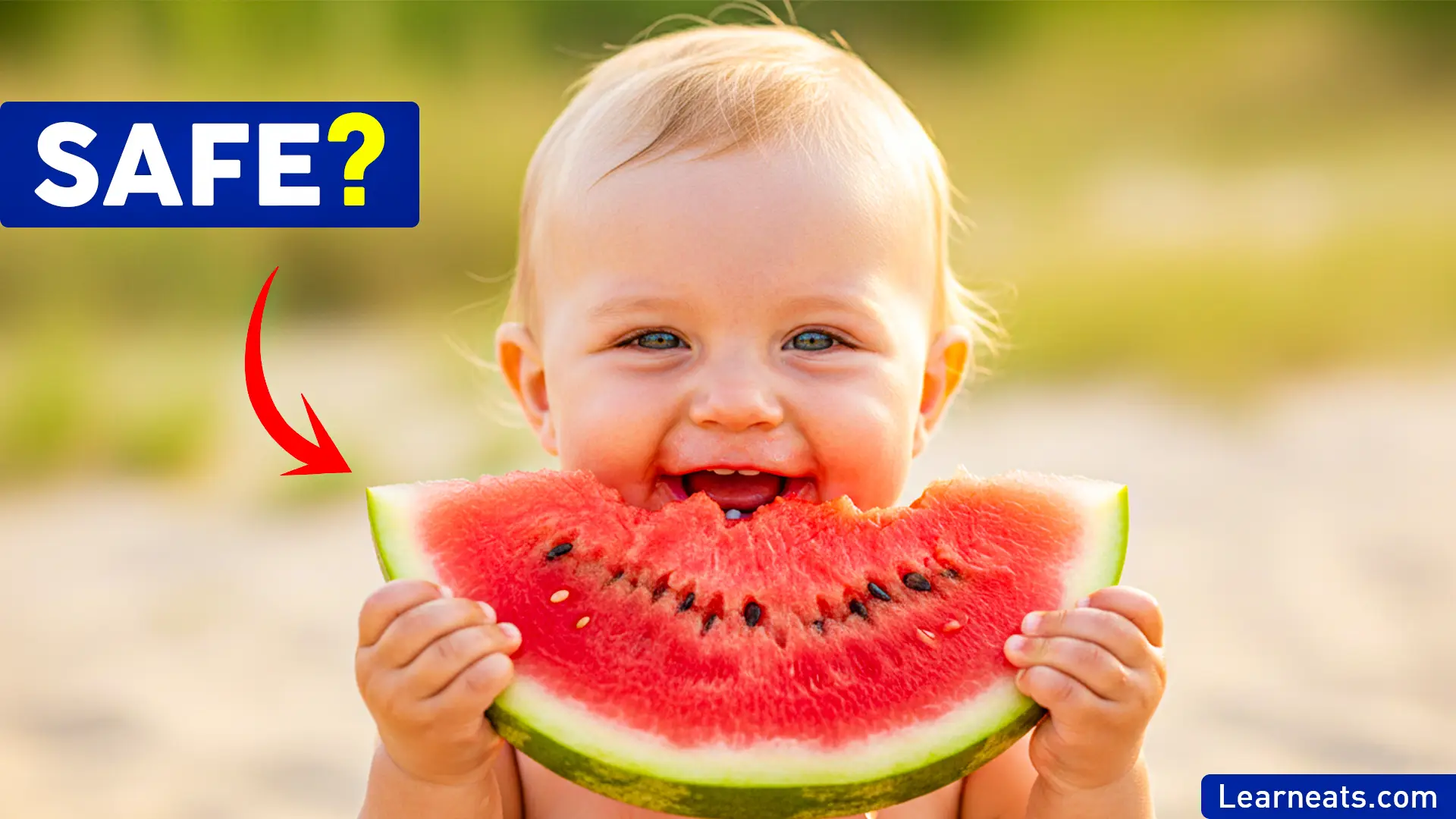
Imagine a sunny afternoon in the park, your tiny tot’s eyes lighting up at the sight of a vibrant pink slice, juice dribbling down their chin as they let out a gleeful squeal. That’s the magic of introducing watermelon to your baby’s world a refreshing treat that sparks joy and curiosity. But as a parent, you’re probably pondering: Can babies eat watermelon? Is watermelon safe for babies?
At LearnEats.com, we’re your trusted guide for creative baby nutrition tips, blending fun with facts to help you navigate those first bites.
We dive deep into questions like “baby eat watermelon” to ensure you’re equipped with safe, imaginative ways to incorporate this summer staple. From pureed delights to finger-friendly fun, LearnEats.com turns everyday feeding into exciting milestones. Join us as we explore how this watery wonder can become a staple in your baby’s diet, all while keeping safety front and center.
Is Watermelon Safe for Babies?
Absolutely, watermelon is generally safe for babies starting around 6 months, when they’re ready for solids. This aligns with guidelines from pediatric experts, who recommend introducing soft, pureed fruits at this stage to ease digestion and minimize risks. For younger tots, start with mashed or pureed versions to avoid any surprises.

Always choose ripe, seedless varieties and wash the rind thoroughly to prevent bacterial contamination. Supervision is key during those first tastes, ensuring a smooth, enjoyable experience.
Watermelon’s high water content about 93% makes it ideal for keeping babies hydrated, especially on warm days. However, introduce it gradually, following the three-day rule to watch for any sensitivities. If your baby has allergies to related foods like melons or pollen, consult a pediatrician first.
Benefits of Watermelon for Babies
The benefits of watermelon for babies are as refreshing as the fruit itself. Loaded with vitamins A and C, it supports vision development and boosts immunity, helping your little one fend off sniffles. Vitamin A aids eye health, while C enhances iron absorption from other foods perfect for growing bodies. Plus, it provides potassium for heart health and magnesium for bone strength.
Don’t forget the antioxidants like lycopene, which combat inflammation and promote overall wellness. As a low-calorie option with natural sugars, it’s a guilt-free way to satisfy sweet cravings. Fiber in the fruit aids digestion, preventing constipation in tiny tummies. Envision your baby giggling over a chilled piece it’s hydration and nutrition in one juicy package!
Risks of Feeding Watermelon to Babies
While rewarding, there are risks of feeding watermelon to babies to consider. Choking hazards top the list: Seeds, even in “seedless” varieties, can be tricky, so remove them all. Firm chunks might cause gagging, especially for beginners, due to the mix of solid and liquid textures. Overripe or underripe pieces amplify this opt for soft, ripe fruit.
Tummy upset is another concern; too much can lead to diarrhea from the high water and sugar content. Allergies are rare but possible, showing as rashes, vomiting, or hives watch closely during introductions. Oral allergy syndrome might occur if there’s pollen sensitivity. Start small to gauge reactions.
Baby Nutrition Tips: Creative Serving Ideas
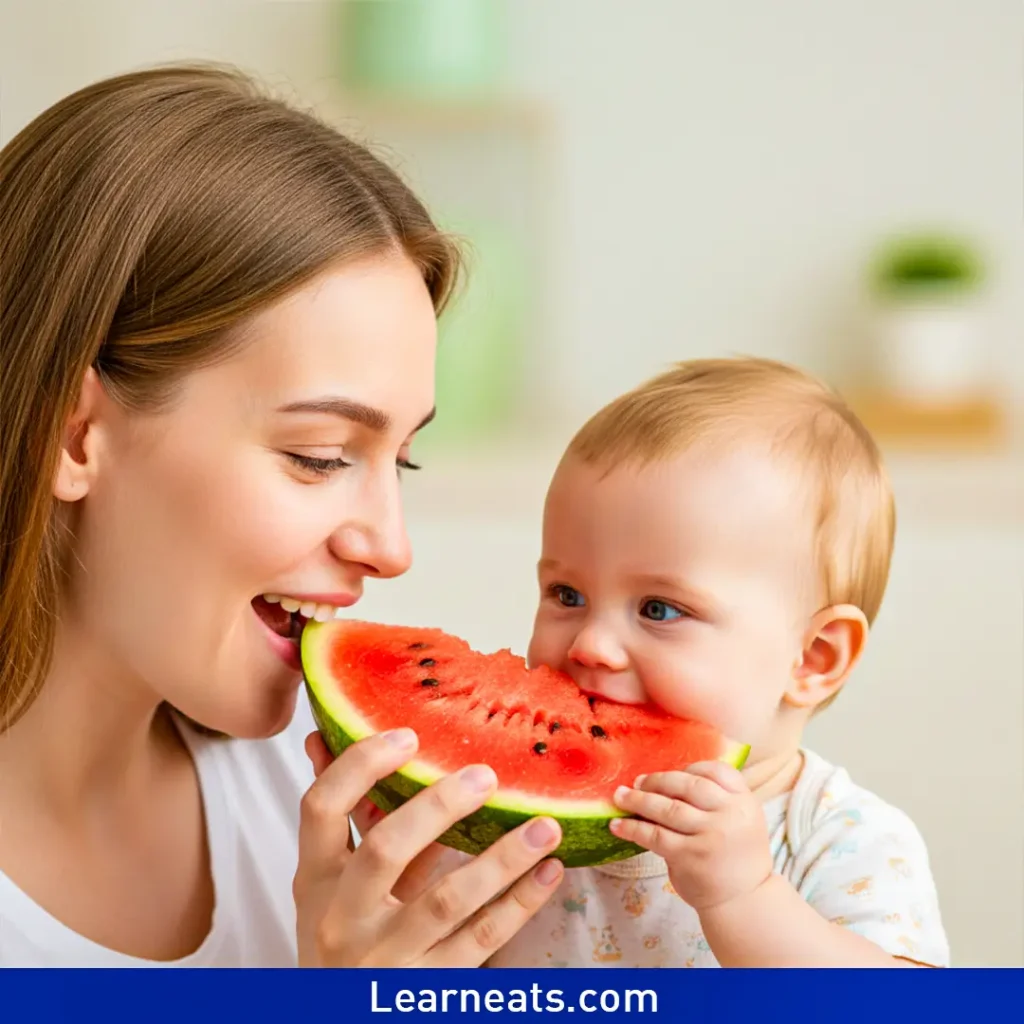
Turn watermelon into adventure with these baby nutrition tips. For 6-8 month olds, puree it into a smooth mash or blend with yogurt for a creamy treat. As they grow, offer sticks about two fingers wide, or wedges on the rind as a natural teether great for self-feeding practice.
Get creative: Freeze pureed watermelon into pops for teething relief, or mix into smoothies with banana for added creaminess. Pair with other baby-friendly fruits like peaches for variety. Always serve at room temperature to avoid shocking sensitive tummies.
- Puree Power: Blend seedless chunks for a hydrating first food.
- Stick Fun: Cut into easy-grip shapes for older babies.
- Frozen Delights: Make mini popsicles for soothing gums.
- Smoothie Magic: Combine with berries for a nutrient boost.
These ideas keep things exciting, fostering a love for healthy eats. Remember, variety in baby-friendly fruits builds a balanced diet watermelon is just the start!
Final Words
As we wrap up, remember the benefits of watermelon for babies like that vital hydration and vitamin punch make it a superstar in safe baby nutrition tips. Yet, balancing those perks with the risks of feeding watermelon to babies, such as choking or overindulgence, ensures joyful mealtimes without worries.
At LearnEats.com, we’re passionate about exploring baby-friendly fruits that spark tiny taste buds and support growth. Embrace the splash of summer flavors, but always prioritize safety with purees and supervision.
Did you know that? Bearded Dragons Eat Raspberries
Frequently Asked Questions
When Can Babies Dive into Watermelon Delights?
Babies can start enjoying watermelon around 6 months, once solids begin. Start with pureed forms for safety. This hydrating fruit fits perfectly into baby nutrition tips.
Is Watermelon Safe for Babies Under 8 Months?
Yes, it’s safe for babies from 6 months if mashed or pureed to avoid choking. Always remove seeds and monitor for reactions.
What Are the Benefits of Watermelon for Babies?
Watermelon boosts hydration with 93% water, plus vitamins A and C for immunity and vision. It’s a low-calorie, antioxidant-rich treat among baby-friendly fruits.
Can a Baby Eat Watermelon Every Day?
In moderation, yes! Daily small portions provide benefits, but watch for tummy upset from excess sugar or water. Balance with other baby nutrition tips.
What Risks Come with Feeding Watermelon to Babies?
Choking on seeds or chunks is a key risk; allergies are rare but possible, like rashes. Start slow to spot issues.
How to Prepare Baby-Friendly Fruits Like Watermelon?
Mash or puree for beginners, or cut into sticks for older tots. Freeze into pops for fun, teething relief.
Is Watermelon Safe for Babies with Allergies?
Generally yes, but if pollen-sensitive, watch for oral allergy syndrome. Introduce one fruit at a time.
Which Fruits Spark Joy in Baby’s First Bites?
Watermelon, bananas, and peaches are top baby-friendly fruits soft, sweet, and nutritious. They encourage exploration in meals.
Can Babies Eat Watermelon for Hydration?
Absolutely! Its high water content makes it a summer hero for keeping little ones refreshed and happy.
What Baby Nutrition Tips Help with Watermelon?
Serve seedless, ripe pieces; blend into smoothies. Supervise to turn this fruit into a safe, giggly adventure.