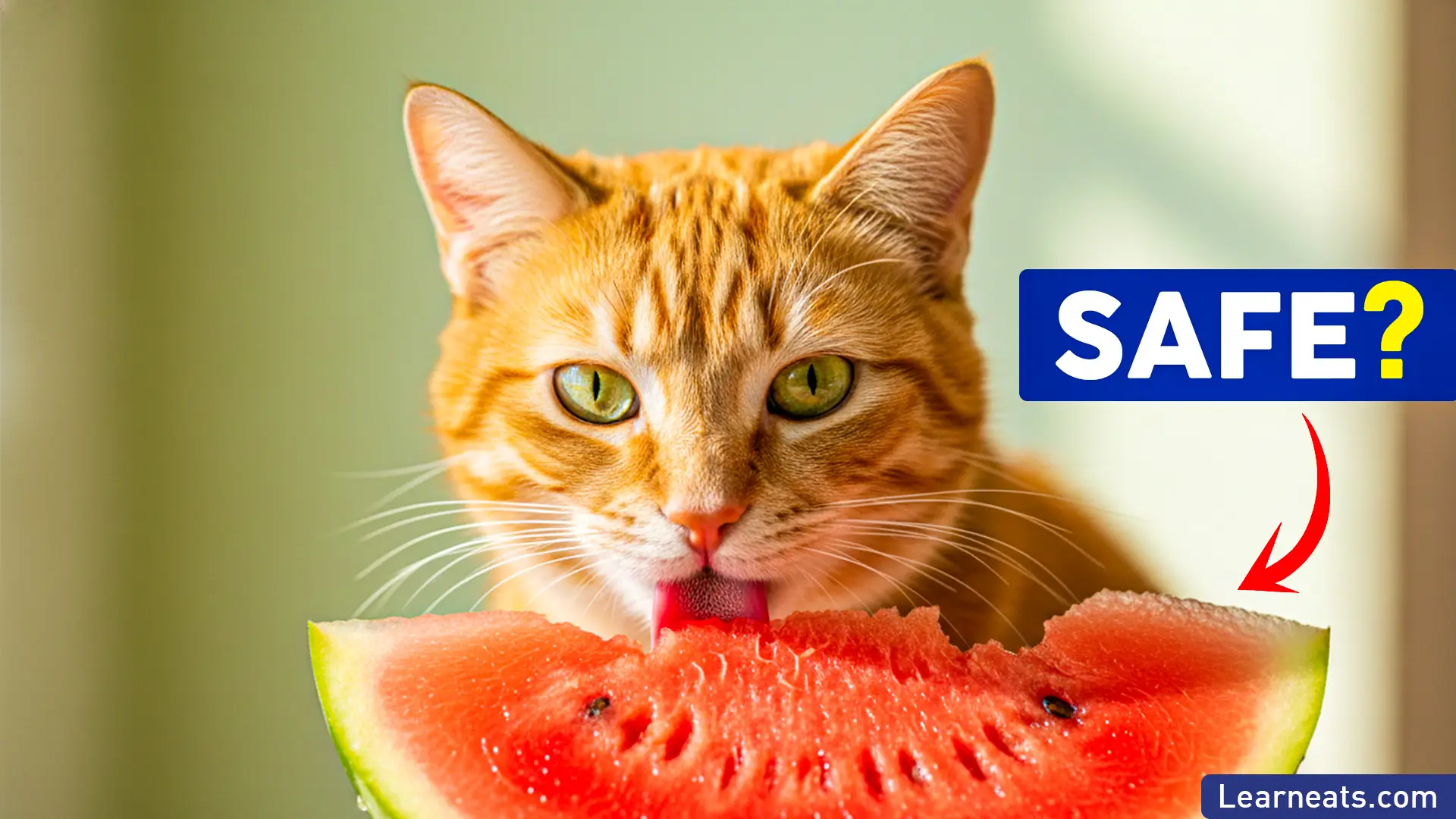
Ever caught your furry friend eyeing that slice of watermelon on a hot day? You’re not alone many pet owners ask, “Can cats eat watermelon?” or “Can a cat eat watermelon?” The good news is, yes, in moderation, but it’s essential to know the details.
At LearnEats.com, we’re your trusted source for pet nutrition tips, helping you make informed choices for your cat’s health. We’ll dive into whether watermelon is safe for cats, exploring its potential as a refreshing treat while emphasizing safety first. Cats are obligate carnivores, so their diet should primarily consist of high-quality cat food, but occasional human foods like fruits can add variety if done right.
Stick around to learn how to introduce watermelon without compromising your cat’s well-being, backed by expert insights. Whether you’re curious about hydration boosts or potential pitfalls, we’ve got you covered with reliable, vet-supported advice.
Is Watermelon Safe for Cats?
Yes, watermelon is generally safe for cats when offered in small amounts and prepared properly. According to the ASPCA, watermelon isn’t listed among toxic people foods for pets, making it a non-toxic option for felines. Vets confirm that the flesh of the fruit poses no poisoning risk, but moderation is key since cats don’t need fruits in their diet.

As obligate carnivores, cats thrive on animal-based proteins, but a tiny bit of watermelon won’t harm healthy adults. However, always consult your vet before introducing new treats, especially if your cat has health issues like diabetes.
Benefits of Watermelon for Cats
Watermelon can offer some perks as a cat-friendly fruit. It’s over 90% water, providing a fun way to boost hydration on warm days perfect for cats who might not drink enough from their bowl.
Packed with vitamins A and C, plus potassium, it serves as a low-calorie treat that supports overall wellness. These nutrients can aid in immune function and skin health, though they’re not essential since complete cat foods already cover them. For active or senior cats, the occasional nibble might add a refreshing twist without packing on pounds one cup has just about 45 calories.
In pet nutrition tips, experts note that such fruits can encourage picky eaters to try something new, but they should never replace balanced meals.
Risks of Feeding Watermelon to Cats
While the flesh is safe, there are risks to watch for. Seeds contain trace cyanide and can cause choking or gut irritation always remove them. The rind is tough and indigestible, potentially leading to blockages, vomiting, or diarrhea if swallowed.
Overfeeding poses another issue: High sugar content might upset diabetic cats or cause weight gain. Too much can lead to digestive woes like loose stools, especially in kittens with sensitive systems. Vets warn that treats should make up no more than 10% of daily calories to avoid nutritional imbalances.
If your cat shows signs like lethargy or stomach upset after eating, contact a vet immediately. Individual reactions vary, so start small.

Tips for Safely Preparing Watermelon as a Cat-Friendly Fruit
Want to share? Here’s how to do it right:
- Wash and Cut Properly: Rinse the watermelon thoroughly to remove pesticides. Slice off the rind completely and scoop out all seeds.
- Portion Control: Offer tiny, bite-sized pieces no more than a teaspoon or two at first. For a 10-pound cat eating 250 calories daily, limit treats to 25 calories max.
- Monitor and Introduce Slowly: Give one new food at a time and watch for reactions. If all’s well, make it an occasional summer snack.
- Alternatives if Needed: If watermelon doesn’t appeal, try other cat-friendly fruits like blueberries or cantaloupe in similar small doses.
- Vet Approval: Always get a thumbs-up from your veterinarian, tailored to your cat’s age, breed, and health.
Following these pet nutrition tips ensures fun without fuss. Sources like the ASPCA and vet consultants emphasize preparation to minimize risks.
Final Words
In wrapping up, remember that safe pet nutrition tips are crucial for your cat’s longevity and happiness. While the benefits of watermelon for cats include hydration and vitamins, the risks of feeding watermelon to cats like seeds or overindulgence mean it’s best as a rare treat.
At LearnEats.com, we encourage exploring more cat-friendly fruits to diversify snacks responsibly. Always prioritize a balanced diet and consult vets for personalized advice. Your feline companion deserves the best stick to moderation, and you’ll both enjoy those purr-fect moments. Dive into our other guides for more insights!
Did you know that? Wondering what else horses can eat?
Frequently Asked Questions
Can cats eat watermelon?
Yes, cats can eat watermelon flesh in small, seedless amounts as an occasional treat. It’s non-toxic but not essential for their diet.
Is watermelon safe for cats?
Watermelon is safe for most healthy cats when prepared properly, per ASPCA guidelines. Avoid seeds and rind to prevent issues.
What are the benefits of watermelon for cats?
Benefits include hydration from its high water content and vitamins like A and C, making it a low-calorie cat-friendly fruit option.
Are there risks of feeding watermelon to cats?
Yes, risks include choking on seeds, digestive blockages from rind, and upset stomachs from excess sugar follow pet nutrition tips for safety.
Can cats eat watermelon seeds?
No, watermelon seeds can cause gastrointestinal irritation or choking; always remove them before offering any to your cat.
Is watermelon rind safe for cats?
Watermelon rind is not safe it’s hard to digest and may lead to blockages or stomachaches in cats.
What cat-friendly fruits can replace watermelon?
Other cat-friendly fruits include blueberries, cantaloupe, or strawberries in moderation for variety in pet nutrition tips.
How much watermelon can a cat eat?
Limit to tiny pieces, no more than 10% of daily calories consult a vet for your cat’s specific needs.
Can kittens eat watermelon?
Kittens should avoid watermelon due to sensitive digestion; stick to kitten-formulated food for optimal growth.
What if my cat eats too much watermelon?
Monitor for vomiting or diarrhea; if symptoms appear, contact a vet immediately for advice on pet nutrition tips.