This article is for general informational purposes only and does not replace personalized veterinary advice; always consult a licensed veterinarian regarding your dog’s specific health needs.
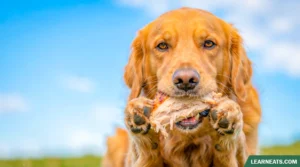
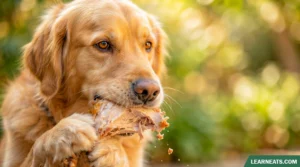
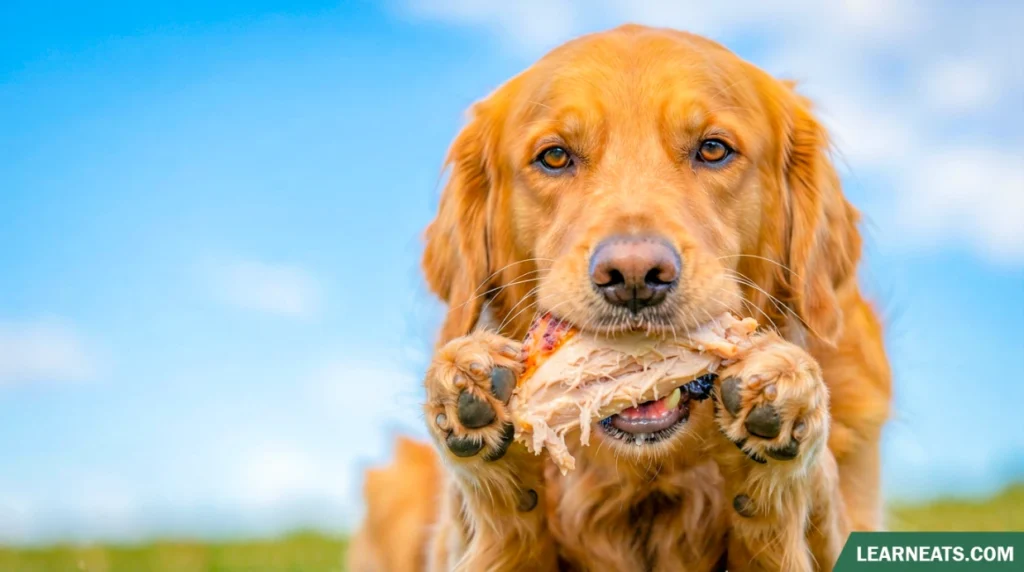
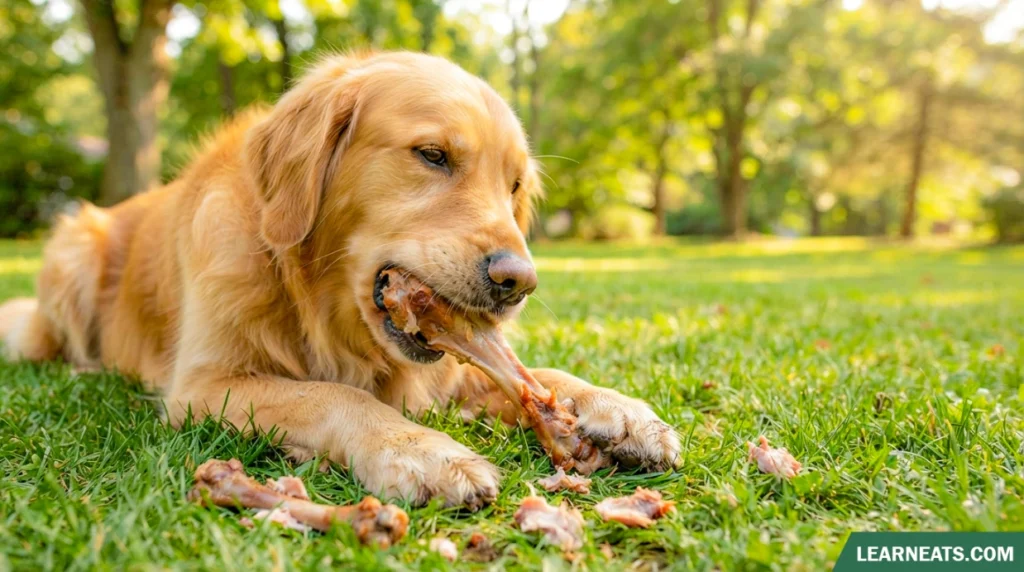
Dogs should never eat cooked turkey bones, as they splinter into sharp fragments that can choke, cut, or puncture the digestive tract. Raw turkey bones carry far less splintering risk and are used in some raw feeding plans, but they still aren’t automatically safe for every dog. Size, chewing style, and the specific bone in question all matter, and a wrong choice can turn a holiday dinner into an emergency vet visit.
This guide breaks down exactly which turkey bones pose a danger, which ones are sometimes tolerated under supervision, and what to do if your dog has already swallowed one.
The Quick Answer: Cooked vs. Raw Turkey Bones
There isn’t one blanket rule for “turkey bones.” The real question is how the bone was prepared, because cooking changes the bone’s structure at a chemical level.
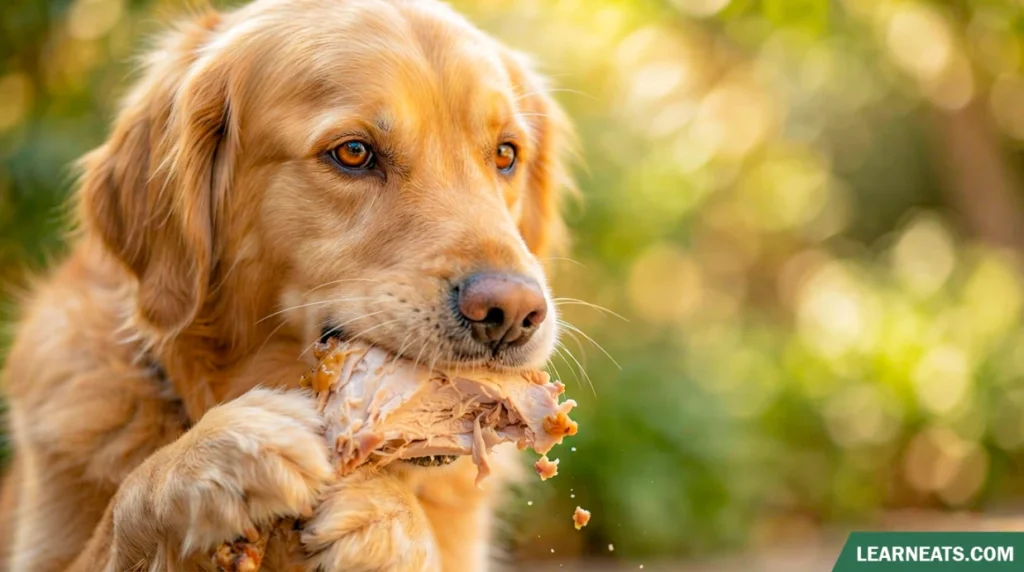
- Cooked turkey bones: Never safe. Roasting, baking, or smoking dries out the bone’s natural moisture and collagen, leaving it brittle and prone to shattering into razor-sharp shards.
- Raw turkey bones: Softer and more pliable, and some veterinarians and raw-feeding advocates allow specific raw bones (like necks) under close supervision, though risks still exist.
- Smoked turkey bones: Treated the same as cooked bones. Smoking and slow-roasting both remove moisture and make bones brittle, so smoked turkey carcasses and legs should be kept away from dogs entirely.
Medical research on canine gastrointestinal injuries consistently points to cooked bone fragments as a leading cause of choking, esophageal blockage, and intestinal perforation in dogs during the holiday season.
Why Cooked Turkey Bones Are So Dangerous
According to veterinary emergency clinics, cooked poultry bones cause more holiday-season ER visits than almost any other food hazard. Here’s what happens biologically:
- Loss of collagen and moisture: Cooking breaks down the collagen that keeps raw bone flexible, leaving a dry, glass-like structure.
- Splintering on impact: When a dog bites down, the bone doesn’t crack cleanly — it shatters into jagged shards with sharp edges.
- Small bone size: Turkey bones, especially rib, wing, and neck bones, are narrow enough for a dog to swallow whole or in large chunks before fully chewing.
- Delayed symptoms: A dog can appear completely normal for 12–24 hours after swallowing bone fragments, only to develop a blockage or internal tear days later.
Warning signs to never ignore after a dog eats a cooked bone:
- Repeated vomiting or gagging
- Drooling or pawing at the mouth
- Straining to pass stool, or stool with visible blood
- Lethargy, whining, or a hunched/painful posture
- Loss of appetite lasting more than a few hours
- Visible swelling or firmness in the abdomen
If any of these appear, contact an emergency veterinarian immediately rather than waiting to see if symptoms resolve on their own.
Can Dogs Eat Raw Turkey Bones?
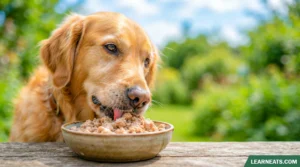
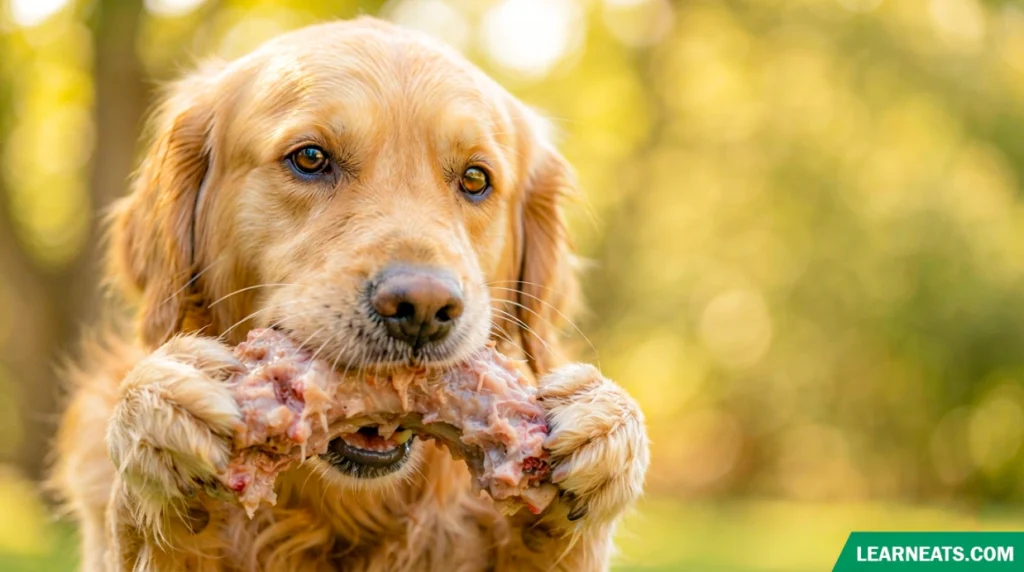
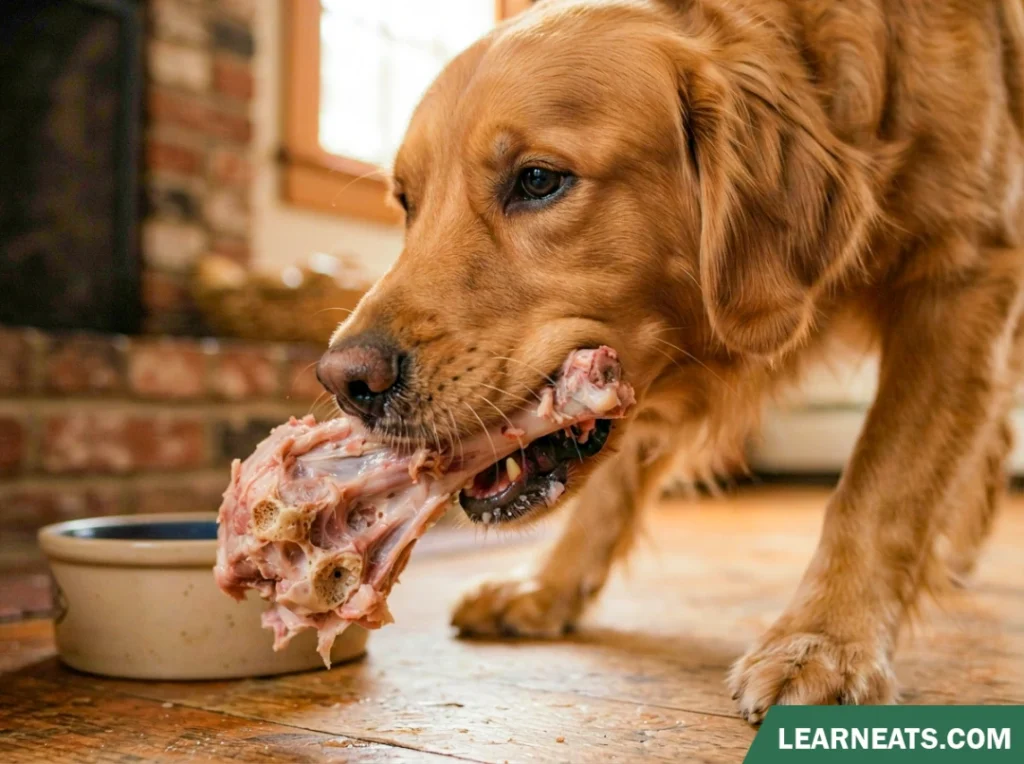
Raw, meaty turkey bones are a different story than their cooked counterparts. Because raw bone retains natural flexibility, it’s far less likely to shatter into dangerous shards. Some raw-feeding programs include raw turkey necks and wings specifically because they’re soft enough for dogs to gnaw and digest.
That said, “less risky” is not the same as “risk-free.” Raw turkey bones still carry concerns:
- Choking hazard: Aggressive chewers can bite off pieces too large to safely swallow, even when raw.
- Bacterial contamination: Raw poultry can carry Salmonella or Campylobacter, which pose a health risk to both the dog and the household.
- Size mismatch: A bone appropriate for a 70-pound Labrador can be a serious choking risk for a 10-pound terrier.
- Dental damage: Even raw bones are hard enough to crack teeth in enthusiastic chewers.
Health experts generally recommend discussing raw bone feeding with a veterinarian before introducing it, particularly for puppies, senior dogs, or dogs with a history of pancreatitis or dental disease.
Can a Dog Eat a Turkey Leg Bone?
Turkey leg bones (drumsticks and thighs) are among the densest, most weight-bearing bones in the bird, and they deserve special caution.
- Cooked turkey leg bones: Strictly off-limits. Their thickness means a splintered fragment can be unusually large and sharp, increasing the risk of a severe internal injury.
- Raw turkey leg bones: Some large-breed dogs can gnaw on a raw drumstick bone under direct supervision, but the density of leg bones makes them a common cause of fractured teeth even when raw. Smaller and toy breeds should avoid turkey leg bones altogether, raw or cooked.
If a dog swallows a leg bone fragment of any kind, treat it as an emergency and call a veterinarian right away, since large fragments are more likely to cause a complete intestinal blockage.
Can Dogs Eat Turkey Neck Bones?
Turkey neck bones are frequently mentioned in raw-feeding communities, and for good reason: they’re naturally softer, contain beneficial cartilage, and are a source of calcium and phosphorus. However, that only applies to raw turkey necks.
- Raw turkey neck bones: Often considered one of the safer raw bone options for medium to large dogs, though supervision is still essential and the neck should be fed whole or in large sections rather than small cut pieces that can be gulped down.
- Cooked turkey neck bones: Just as hazardous as any other cooked bone. The narrow, tubular shape of a cooked neck bone makes it especially easy for a dog to swallow whole, raising the risk of choking or esophageal obstruction.
Small-breed dogs and dogs that tend to swallow food without chewing should avoid neck bones in any form, since the narrow bone segments are an easy choking hazard regardless of preparation.
Smoked Turkey Bones: A Hidden Holiday Danger
Smoked turkey is a popular centerpiece, but smoked bones are arguably riskier than plain roasted ones. The low, slow smoking process removes even more moisture from the bone than standard roasting, leaving it extremely dry and brittle. Smoked turkey carcasses, legs, and wings should be disposed of in a secured, dog-proof trash container immediately after the meal, never left cooling on a counter or in an unattended roasting pan.
What to Do If Your Dog Eats a Turkey Bone
Staying calm and acting quickly gives a dog the best possible outcome.
- Do not induce vomiting unless a veterinarian specifically instructs it — bringing bone fragments back up can cause additional injury on the way out.
- Check the mouth and throat carefully for visible fragments, but avoid reaching deep into the throat, which can push a bone further down.
- Call a veterinarian or emergency animal hospital immediately, even if the dog seems fine, and describe the size and type of bone swallowed.
- Offer a small amount of bread or a bland, soft food only if a veterinarian recommends it, as this can sometimes help cushion sharp fragments on their way through the digestive tract.
- Monitor closely for 48–72 hours, watching for any of the warning signs listed earlier, since obstructions and perforations don’t always show symptoms immediately.
- Follow up with imaging if advised. Vets often use X-rays to locate bone fragments and determine whether surgical removal is necessary.
Turkey Bones Safety Comparison Table
| Bone Type | Preparation | Splinter Risk | Choking Risk | Vet Recommendation |
|---|---|---|---|---|
| Turkey rib bones | Cooked | Very High | High | Avoid completely |
| Turkey wing bones | Cooked | Very High | High | Avoid completely |
| Turkey leg/drumstick bones | Cooked | High | Moderate-High | Avoid completely |
| Turkey leg/drumstick bones | Raw | Low-Moderate | Moderate | Large breeds only, supervised |
| Turkey neck bones | Cooked | Very High | Very High | Avoid completely |
| Turkey neck bones | Raw | Low | Moderate | Often used in raw diets, supervised |
| Smoked turkey bones (any cut) | Smoked | Very High | High | Avoid completely |
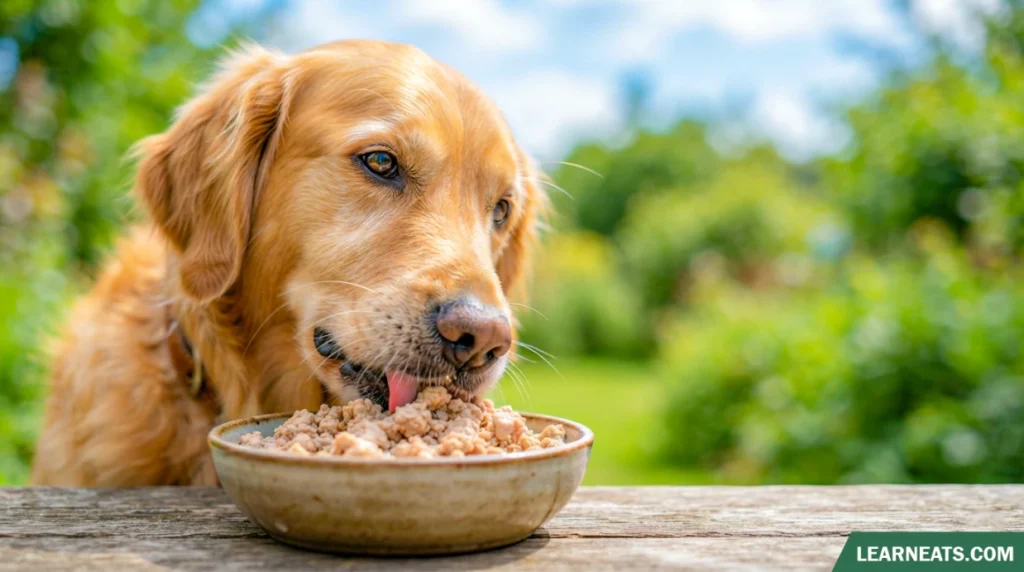
| Ground/pureed turkey bone (commercial raw diets) | Processed raw | Minimal | Minimal | Generally considered safe as a diet ingredient |
| Boneless, plain cooked turkey meat | Cooked, no seasoning | None | Low | Safe in moderation |
Risk levels are general guidelines. Always factor in a dog’s individual size, chewing habits, and health history.
Safer Alternatives to Turkey Bones
Pet owners who want to give their dog something to chew on during the holidays have safer options:
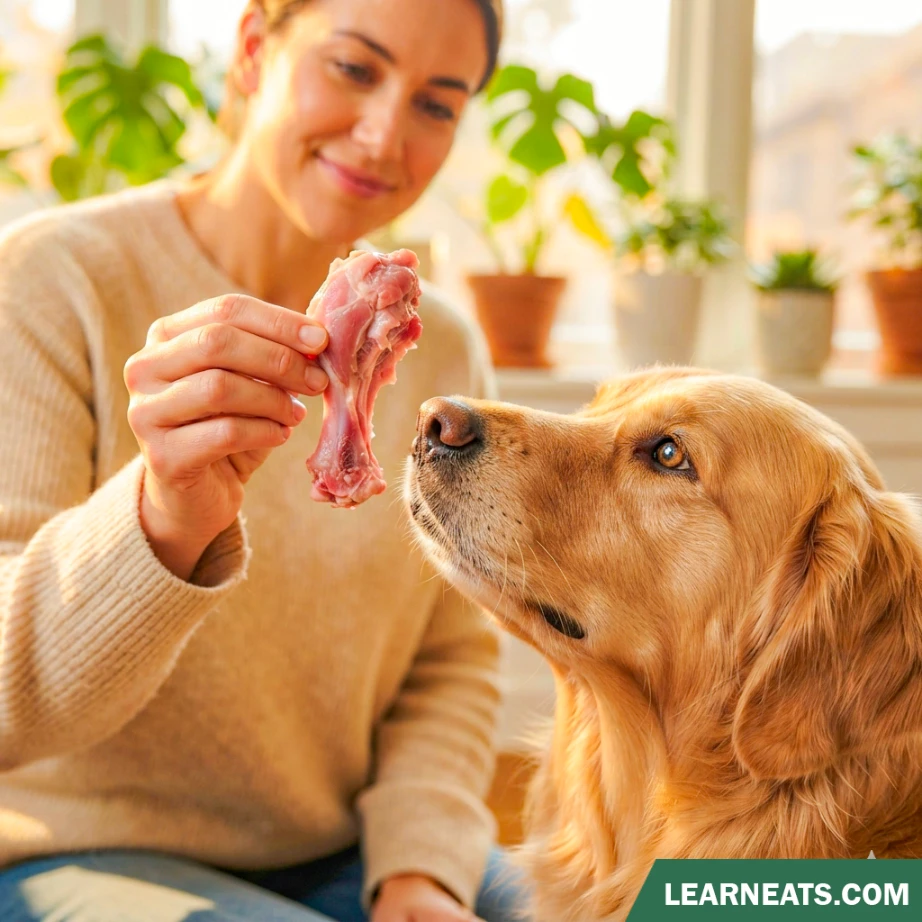
- Plain, boneless, skinless cooked turkey meat, cut into small pieces with no seasoning, butter, or gravy
- Vet-approved dental chews designed to mimic the satisfaction of gnawing without the splintering risk
- Commercially manufactured raw or freeze-dried bone products that have been processed specifically for safe chewing
- Frozen KONG toys stuffed with dog-safe ingredients as a long-lasting chewing outlet
Did you know that? Dogs Eat Turkey Necks
Frequently Asked Questions
Can dogs eat turkey bones at all?
Dogs should never eat cooked turkey bones because they splinter easily and can cause choking or internal injury. Raw turkey bones carry lower risk and are sometimes used in raw feeding, but they still require supervision and veterinary guidance.
Can dogs eat cooked turkey bones if they’re cut into small pieces?
No. Cutting a cooked bone into smaller pieces does not remove the splintering risk and can actually make individual shards easier for a dog to swallow whole.
Can a dog eat a turkey leg bone safely?
Cooked turkey leg bones are never safe due to their density and high splintering risk. Raw leg bones may be tolerated by large, supervised dogs, but they still pose a risk of cracked teeth.
Can dogs eat turkey neck bones?
Raw turkey neck bones are commonly used in raw-feeding diets and are considered one of the softer bone options, but cooked turkey neck bones should never be given, as their narrow shape makes them an easy choking hazard.
Can dogs eat raw turkey bones without getting sick?
Raw turkey bones lower the risk of splintering, but they can still carry bacteria like Salmonella, which may cause illness in dogs and humans handling the food. Proper food safety handling reduces this risk.
What happens if a dog eats a cooked turkey bone?
A dog may show no symptoms for hours or even days, but internal signs like vomiting, bloody stool, or abdominal pain can indicate a blockage or perforation. Immediate veterinary evaluation is strongly recommended.
How long after eating a turkey bone will a dog show symptoms?
Symptoms can appear within a few hours or take up to 2–3 days to develop, depending on where the fragment travels through the digestive tract. This delayed onset is why close monitoring for several days is essential.
Can dogs eat smoked turkey bones?
No. Smoking removes moisture from bone the same way roasting does, making smoked turkey bones just as brittle and dangerous as any other cooked bone.
Can dogs eat turkey bones from soup or broth?
Bones that have been boiled or simmered for broth are also considered cooked and carry the same splintering risk, so they should be removed and discarded before serving broth to a dog.
Is it safe to give a puppy a turkey bone?
Puppies have smaller airways and developing teeth, making both cooked and raw turkey bones riskier for them than for adult dogs. Veterinary guidance is especially important before introducing any bone to a puppy’s diet.
What should I do if my dog swallowed a turkey bone whole?
Contact a veterinarian or emergency animal hospital immediately, even if the dog appears normal, since a whole swallowed bone can still cause an obstruction later. Avoid inducing vomiting unless a professional specifically advises it.
Are there any turkey bones that are always safe for dogs?
No bone can be labeled 100% risk-free, but properly sized raw bones from reputable raw-diet suppliers, fed under supervision, carry the lowest overall risk compared to any cooked, smoked, or boiled turkey bone.