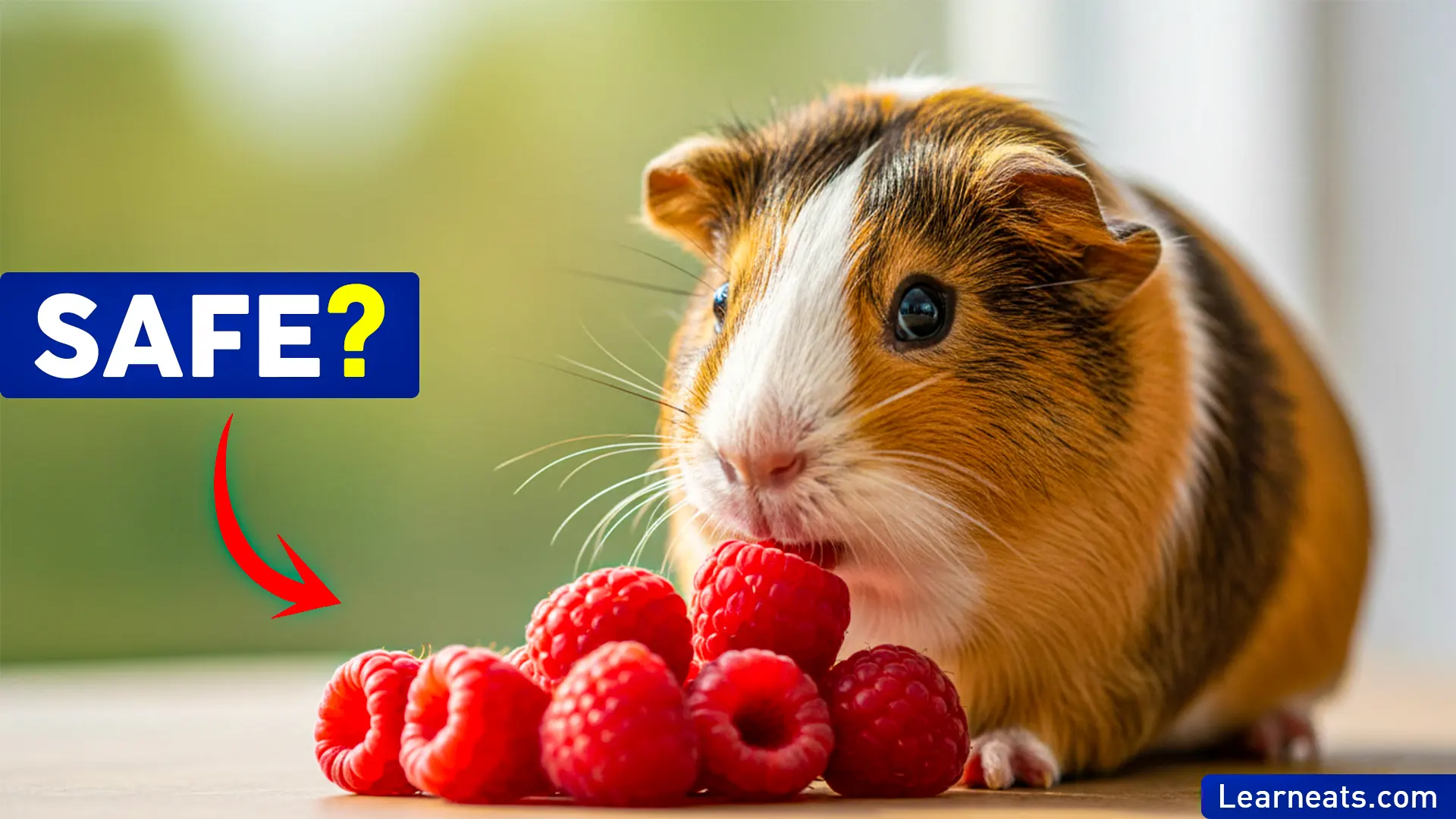
Imagine peeking into your guinea pigs’ cozy habitat on a lazy afternoon, only to catch them wheeking softly at a handful of plump, ruby-red raspberries you’ve scattered nearby. Their little noses twitching, eyes wide with curiosity it’s an adorable scene that prompts the question: can guinea pigs eat raspberries?
Learn Eats stands as your essential resource for creative guinea pig nutrition tips, blending expert insights with playful ideas to keep your furry friends healthy and happy. From novice owners to seasoned cavy enthusiasts, we focus on innovative ways to diversify their herbivorous diet with safe, natural additions.
Raspberries, with their vibrant tang, can be a wonderful occasional delight when introduced properly. In this guide, we’ll explore the safety aspects, health advantages, and clever serving hacks.
Safety First: Is Raspberries Safe for Guinea Pigs?
Raspberries are safe for guinea pigs as an occasional treat, thanks to their sweet, tangy allure that captivates these little herbivores. The fruit itself, including soft seeds, poses no toxicity risks, but always wash thoroughly to remove any residues. Raspberry leaves are actually a bonus they’re non-toxic and can be offered fresh or dried for extra foraging fun.

Benefits of Raspberries for Guinea Pigs
Beyond the delight, raspberries deliver real health wins. Packed with antioxidants, they help combat free radicals, supporting immune health in your active piggies. Fiber aids gut health, promoting smooth digestion and preventing common issues like bloat.
On warmer days, the juicy water content provides a fun hydration source, keeping your pets refreshed without extra water bowls. Essential vitamins, especially C, are crucial since guinea pigs can’t produce it themselves a small berry boost can help maintain vibrant coats and energy levels.

Risks of Feeding Raspberries to Guinea Pigs
Caution is essential the high sugar content can lead to tummy troubles, including diarrhea or weight gain if overfed. Guinea pigs’ sensitive guts thrive on low-sugar fare, so excess might disrupt their microbiome. For pups or seniors, even smaller amounts apply to avoid digestive stress. Moldy berries are a definite hazard, risking respiratory issues.
In guinea pig nutrition tips, fruits should never dominate; aim for 5-10% of their intake to preserve balance.
Guinea Pig Nutrition Tips for Serving Raspberries
Get inventive to make treats engaging and safe!
- Chop into tiny pieces and mix with timothy hay for a berry-infused forage adventure that mimics wild grazing.
- Freeze halved berries for a cooling summer snack, perfect for hot days when piggies need extra chill.
- Combine with other guinea pig-friendly fruits like blueberries in a mini salad, rotating for variety.
- Hand-feed during bonding time to build trust, watching their delighted popcorn jumps.
- For seasonal vibes, harvest fresh from your garden in summer, ensuring no pesticides for organic goodness.
A fresh angle: During molting seasons, the vitamin C in raspberries can support skin health, making them a timely ally. Always monitor for preferences some piggies gobble eagerly, while others savor slowly. These ideas elevate routine care, turning nutrition into playful interaction.
Incorporating raspberries thoughtfully enhances your guinea pigs’ world. With their appealing juiciness and nutrients, these berries show that small treats yield big happiness.
Final Words
To wrap it up, raspberries can be a charming addition to your guinea pigs’ menu with careful handling. The benefits of raspberries for guinea pigs, such as vitamin C for immunity and fiber for digestion, bring valuable perks. Still, the risks of feeding raspberries to guinea pigs, like sugar spikes causing gut woes, highlight the importance of limits.
Did you know that? Frenchies Eat Watermelon
Frequently Asked Questions
1. Can guinea pigs eat raspberries every day?
No, but as a weekly treat, they’re fabulous! Moderation avoids sugar highs in guinea pig nutrition tips.
2. Is raspberries safe for guinea pigs, including seeds?
Yes, seeds are soft and safe! This makes raspberries a go-to guinea pig-friendly fruit option.
3. What are the benefits of raspberries for guinea pigs?
Antioxidants boost immunity, fiber aids digestion, and hydration keeps them perky berry magic!
4. Are there risks of feeding raspberries to guinea pigs?
High sugars might cause diarrhea; keep it minimal for solid guinea pig nutrition tips.
5. How many raspberries can a guinea pig eat without issues?
1-2 per piggie per serving, occasionally. Ensures is raspberries safe for guinea pigs long-term.
6. What makes raspberries a top guinea pig-friendly fruit?
Vitamin C punch and tasty appeal piggies wheek for this nutritious delight!
7. Can baby guinea pigs have raspberries?
Wait till they’re older; mash for safety in gentle guinea pig nutrition tips.
8. Do raspberry leaves harm guinea pigs?
Nope, they’re safe and enriching! Add to hay for extra guinea pig-friendly fruits fun.
9. How to serve raspberries as guinea pig treats?
Chop, freeze, or mix with hay sparks joy in guinea pig nutrition tips!
10. Why include raspberries in guinea pig diets?
For variety and health boosts like antioxidants a simple guinea pig-friendly fruits upgrade!