This article is for general educational purposes only and is not a substitute for professional veterinary diagnosis or treatment; always consult your veterinarian about your dog’s specific diet.
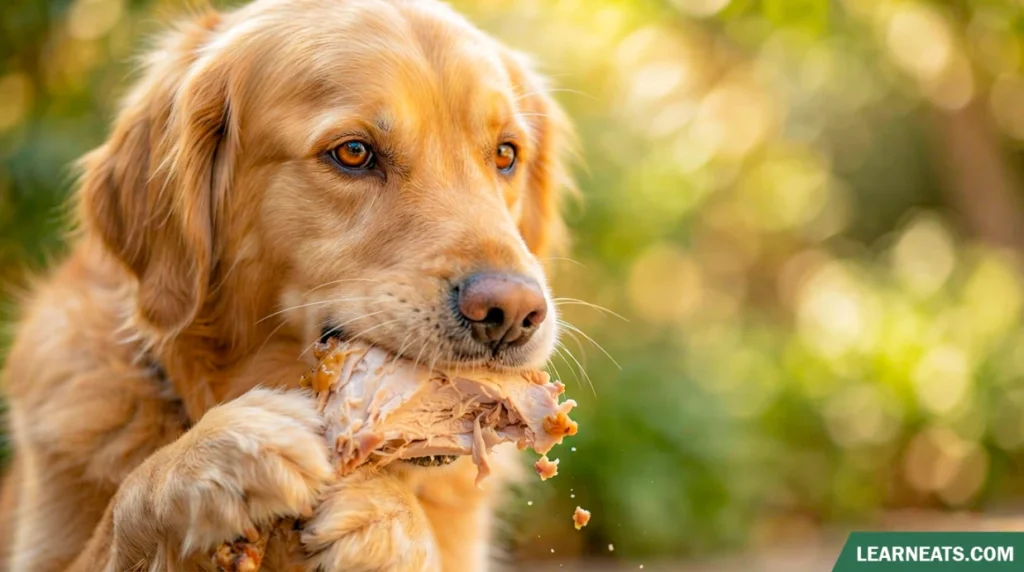
Yes, dogs can eat cooked turkey, but only when it is plain, boneless, skinless, and unseasoned. Turkey meat itself is not toxic to dogs and is even a common protein source in many commercial dog foods. The danger doesn’t come from the turkey — it comes from what’s cooked into it, what’s still attached to it, and how much of it lands on your dog’s plate.
Below, this guide breaks down every part of the bird — meat, skin, bones, necks, ground turkey, and turkey bacon — so you know exactly what’s safe, what’s risky, and what needs an emergency call to your vet.
The Quick Answer: What’s Safe and What’s Not
Before diving into detail, here’s the short version pet owners search for most:
- Plain cooked turkey breast (no skin, no bones): Safe in small amounts
- Turkey skin: Not recommended — too fatty
- Cooked turkey bones (including necks): Never safe — high splintering risk
- Raw or dehydrated turkey necks: Possible option for some dogs, only with vet guidance
- Seasoned, buttered, or gravy-covered turkey: Not safe
- Ground turkey (plain, fully cooked): Safe in moderation
- Turkey bacon or deli turkey: Not recommended — high sodium and additives
Why Plain Cooked Turkey Can Be Safe for Dogs
Turkey is a lean, easily digestible protein. It supplies B vitamins, selenium, and zinc, nutrients that support muscle repair, immune function, and healthy skin. According to veterinary nutrition guidance, unseasoned white turkey meat that has been properly cooked is generally fine for dogs in small quantities, and plain ground turkey without additives is considered a healthy option as well.
That said, “safe” doesn’t mean “unlimited.” Turkey should be treated as an occasional treat or food topper, not a meal replacement, and it should never make up more than about 10% of your dog’s daily caloric intake.
How to Prepare Turkey Safely for Your Dog
If you want to share a piece of turkey with your dog, follow these steps every time:
- Choose white meat (breast), not dark meat, which carries more fat
- Remove all skin before serving
- Remove every bone, checking carefully for small fragments
- Skip the seasoning — no salt, pepper, garlic, onion powder, or herb rubs
- Avoid butter, oil, gravy, or stuffing mixed into the meat
- Cut it into small, bite-sized pieces to reduce choking risk
- Serve it fully cooked, never raw or undercooked
Why Turkey Skin and Fat Are a Problem
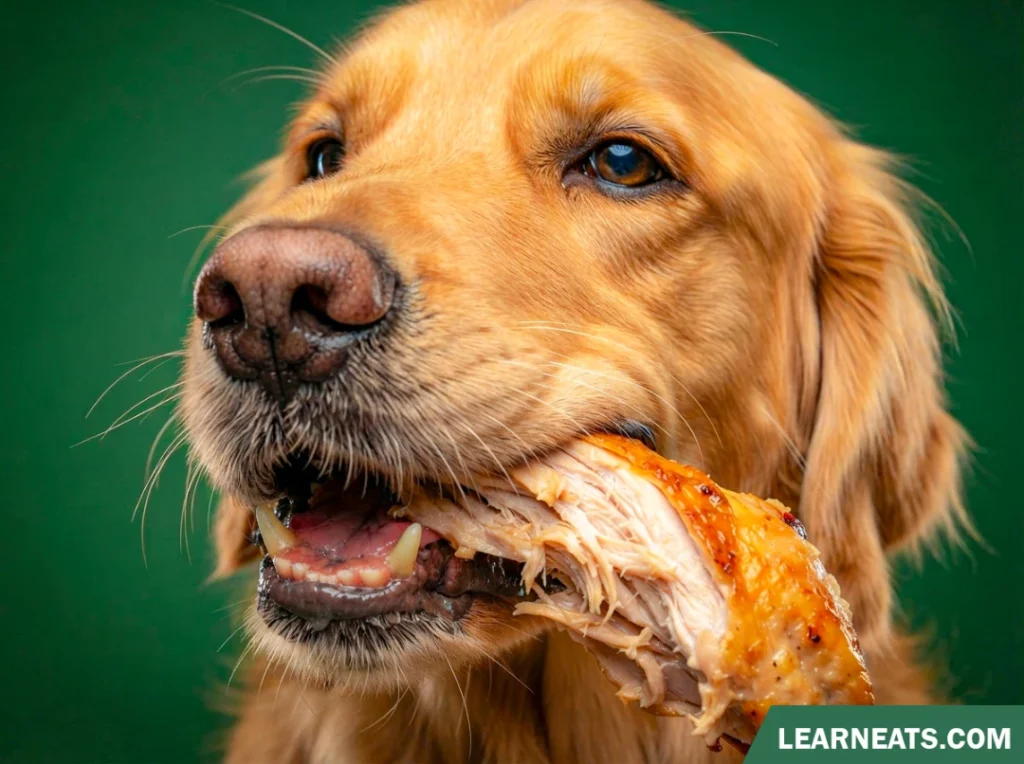
Turkey skin looks harmless, but it’s one of the most common causes of digestive trouble in dogs during the holidays. The skin holds a concentrated amount of fat, and that fat is the trigger for pancreatitis — a painful inflammation of the pancreas that can escalate into a genuine medical emergency.
Medical research suggests that even a single high-fat meal can be enough to set off an episode in a susceptible dog, particularly smaller breeds and dogs with a history of digestive sensitivity. Watch for these warning signs after any fatty food exposure:
- Vomiting or repeated retching
- Diarrhea
- Abdominal pain or a hunched posture
- Lethargy or reluctance to move
- Loss of appetite
If your dog shows any of these signs after eating turkey skin, fatty scraps, or gravy, contact your veterinarian the same day.
Can Dogs Eat Cooked Turkey Bones?
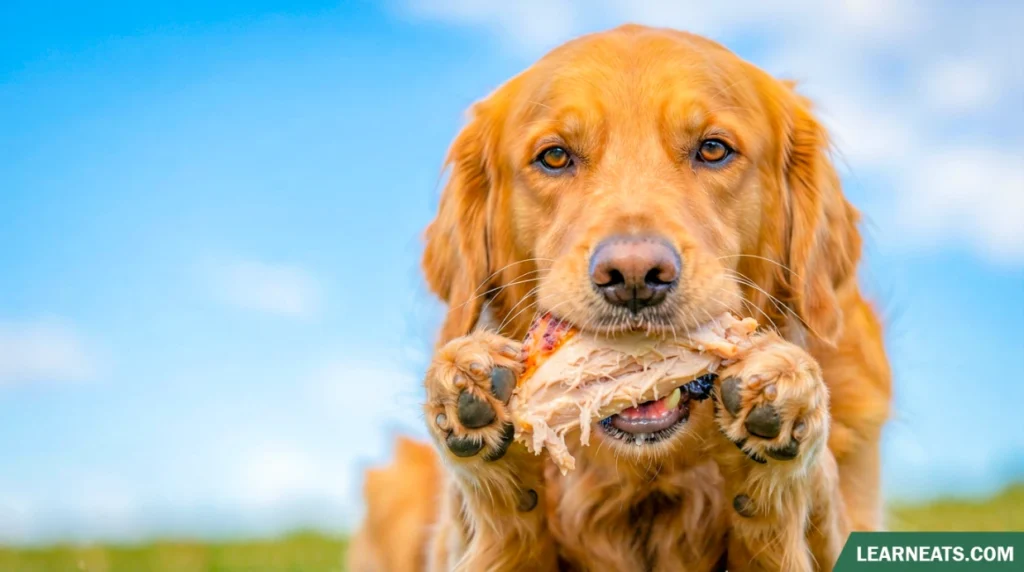
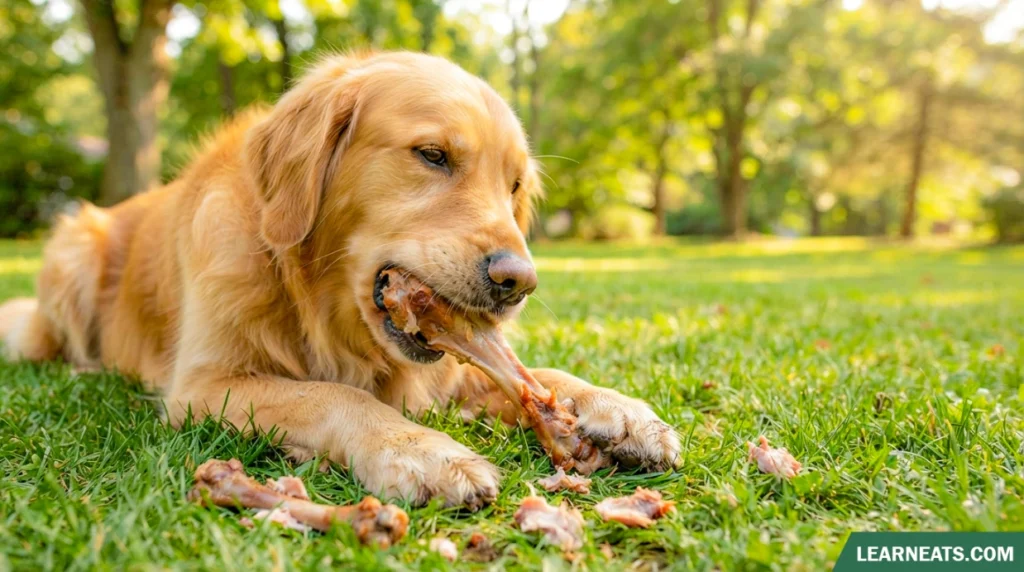
No. Cooked turkey bones should never be given to a dog under any circumstance. This applies to leg bones, wing bones, carcass fragments, and neck bones alike.
Cooking changes the structure of bone. Raw bone has some flexibility; cooked bone becomes dry, brittle, and prone to splintering into sharp shards the moment a dog bites down. Those shards can:
- Get lodged in the mouth, throat, or esophagus
- Puncture or tear the stomach lining or intestinal wall
- Cause a partial or complete intestinal blockage
- Trigger internal bleeding or infection requiring emergency surgery
If your dog manages to swallow a piece of cooked turkey bone, don’t wait to see what happens. Call your veterinarian or an emergency animal hospital right away, even if your dog seems fine at first — some injuries take hours or days to show symptoms like straining, vomiting, or reluctance to eat.
Can Dogs Eat Cooked Turkey Necks?
This is one of the most searched questions every holiday season, and it deserves a direct answer: a cooked turkey neck is not a safe chew for dogs.
Turkey necks contain a column of small, dense bones surrounded by cartilage and meat. When raw, some raw-feeding guides consider these bones soft enough for supervised chewing. Once cooked, though, those same bones turn brittle, and the risk profile flips entirely. A cooked turkey neck bone splinters far more easily than a cooked leg or wing bone because the bone fragments are already small — making them easy to swallow before they’re properly chewed.
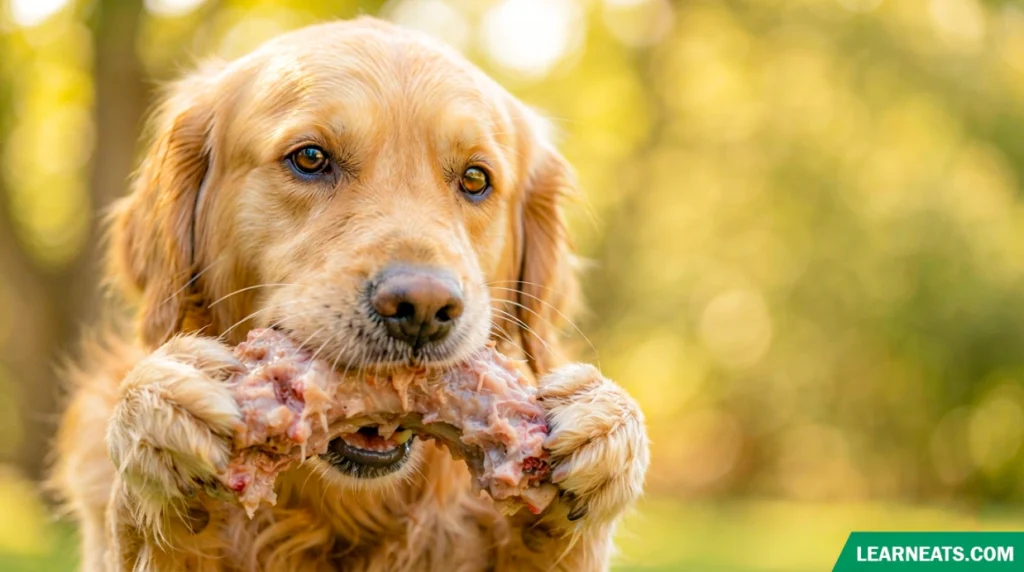
Can a dog eat a cooked turkey neck safely at all? Veterinary sources are largely consistent: no. The recommendation across most veterinary and pet-safety resources is to only offer turkey necks raw, frozen, or dehydrated at low temperature, and only after checking with your vet, especially for:
- Small or toy-breed dogs (choking risk from bone size alone)
- Dogs with a history of pancreatitis, kidney disease, or gulping their food
- Puppies or senior dogs with weaker teeth
Even raw or dehydrated necks carry some risk of bacterial contamination (Salmonella, E. coli) and should always be fed under supervision.
Can Dogs Eat Ground Turkey?
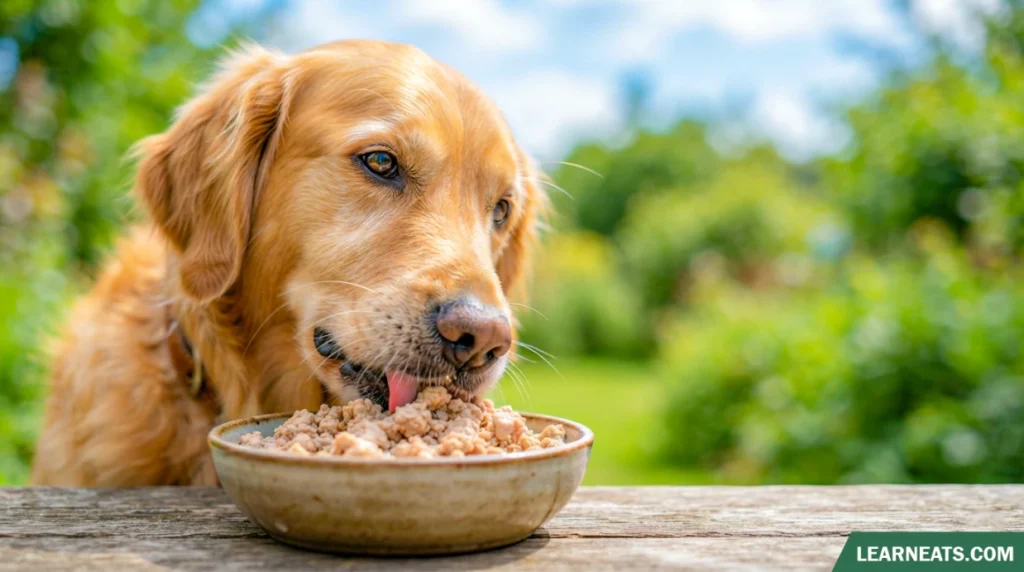
Yes, dogs can eat cooked ground turkey, provided it’s plain and lean. Ground turkey avoids the bone hazard entirely, which makes it a popular option for home-cooked dog meals and training treats.
To keep it dog-safe:
- Choose lean or extra-lean ground turkey — lower fat content means lower pancreatitis risk
- Cook it thoroughly with no oil, butter, salt, onion, or garlic
- Drain excess grease before serving
- Avoid seasoned or pre-marinated ground turkey products sold for human cooking
Plain ground turkey mixed into your dog’s regular food can work well as an occasional protein boost, especially for dogs that need a bland, low-fat diet during digestive recovery — though your vet should always guide any therapeutic diet changes.
What About Turkey Bacon and Deli Turkey?
Turkey bacon and deli-sliced turkey are best avoided. Both are processed foods, and processing is exactly where the risk hides:
- Turkey bacon is cured and typically high in sodium, nitrates, and fat, all of which strain a dog’s digestive system and, over time, contribute to conditions like pancreatitis and sodium ion toxicity.
- Deli turkey often contains added salt, preservatives, and sometimes onion or garlic powder for flavoring — ingredients that are toxic to dogs even in small amounts.
If your dog swipes a small piece of either off the counter, it’s unlikely to cause serious harm as a one-off incident, but neither should be offered intentionally or regularly.

The Ingredients Hiding in Your Turkey Dinner
Holiday turkey is rarely served plain. Watch for these common additions, which range from mildly upsetting to genuinely toxic for dogs:
- Onions and garlic (fresh, powdered, or in stuffing) — can damage red blood cells and cause a dangerous form of anemia
- Butter and oil — high fat content, pancreatitis risk
- Salt — excessive sodium can cause vomiting, tremors, and in extreme cases, sodium poisoning
- Grapes or raisins (in some stuffing recipes) — linked to acute kidney failure in dogs
- Xylitol (occasionally found in sugar-free glazes) — extremely toxic, even in tiny amounts
Turkey Safety Comparison Table
| Turkey Type / Part | Safety Level | Recommended Prep | Key Risk | Suitable Serving Size |
|---|---|---|---|---|
| Plain cooked turkey breast (no skin/bones) | ✅ Safe | Boiled, baked, or roasted plain | Low, if unseasoned | Small treat portion, up to 10% of daily calories |
| Cooked ground turkey (lean, plain) | ✅ Safe | Fully cooked, no oil/salt | Fat content if not lean | Small mixed-in portion |
| Turkey skin | ⚠️ Not Recommended | N/A — remove before serving | Pancreatitis | Avoid entirely |
| Cooked turkey bones (any part) | ❌ Unsafe | N/A — never feed | Splintering, blockage, internal injury | Zero |
| Cooked turkey neck | ❌ Unsafe | N/A — never feed cooked | Bone splinters, choking, GI blockage | Zero |
| Raw or dehydrated turkey neck | ⚠️ Vet-Guided Only | Raw, frozen, or low-temp dehydrated | Salmonella, choking, blockage | Vet-approved size only, supervised |
| Turkey bacon | ⚠️ Not Recommended | N/A | High sodium, fat, nitrates | Avoid; incidental bite unlikely harmful |
| Deli turkey | ⚠️ Not Recommended | N/A | Sodium, preservatives, seasoning | Avoid regular feeding |
| Seasoned/buttered/gravy-covered turkey | ❌ Unsafe | N/A | Onion/garlic toxicity, fat, sodium | Zero |
Signs of a Turkey-Related Emergency
Contact your veterinarian or an emergency animal hospital immediately if your dog shows any of the following after eating turkey:
- Choking, gagging, or repeated attempts to swallow
- Vomiting or diarrhea that continues beyond a few hours
- Visible pain when touching the abdomen
- Straining or inability to pass stool
- Blood in vomit or stool
- Lethargy, weakness, or collapse
- Known or suspected ingestion of a bone, onion, garlic, or xylitol-containing food
Acting quickly matters. Bone fragments and toxic ingredients can cause damage well before outward symptoms appear.
A Simple Rule to Remember
When deciding whether to share turkey with a dog, one rule covers almost every scenario: if it isn’t plain, boneless, and unseasoned, it isn’t for your dog. That single filter eliminates the bones, the skin, the gravy, the stuffing, and the seasoned edges that cause the vast majority of holiday emergency vet visits.
Did you know that? Dogs Eat Turkey Bones?
Frequently Asked Questions
Can dogs eat cooked turkey?
Yes, dogs can eat cooked turkey as long as it’s plain, boneless, and skinless. Avoid seasoning, butter, or gravy, and keep portions small and occasional.
Can dogs eat cooked turkey bones?
No. Cooking makes bones brittle and prone to splintering, which can injure a dog’s mouth, throat, or digestive tract. Never feed cooked turkey bones of any kind.
Can dogs eat cooked turkey necks?
No, cooked turkey necks are not safe. The small bones inside splinter easily once cooked, creating a serious choking and blockage risk. Raw or dehydrated necks are a possible alternative, but only under veterinary guidance.
Can dogs eat cooked ground turkey?
Yes, plain, lean, fully cooked ground turkey without oil, salt, or seasoning is generally safe for dogs in moderate amounts.
Can a dog eat a cooked turkey neck safely if it’s cut into small pieces?
Cutting a cooked neck into pieces does not remove the risk, since the bone fragments themselves are what splinter and cause harm. Veterinary guidance still recommends avoiding cooked necks altogether.
Can dogs eat turkey necks raw or cooked?
Raw or properly dehydrated turkey necks carry fewer splintering risks than cooked ones, though they still carry a bacterial contamination risk. Cooked turkey necks should always be avoided.
Can dogs eat turkey bacon?
Turkey bacon is not recommended due to its high sodium, fat, and nitrate content, which can upset a dog’s stomach or contribute to pancreatitis over time. A single accidental bite is unlikely to cause serious harm, but it shouldn’t be offered intentionally.
Is turkey skin bad for dogs?
Yes. Turkey skin is high in fat and is a common trigger for pancreatitis in dogs, particularly smaller breeds. It’s best removed entirely before offering turkey to a dog.
Is turkey skin bad for dogs?
Yes. Turkey skin is high in fat and is a common trigger for pancreatitis in dogs, particularly smaller breeds. It’s best removed entirely before offering turkey to a dog.
Can dogs eat turkey raw or cooked?
Cooked turkey is safer than raw turkey, since raw poultry can carry Salmonella and other harmful bacteria. Turkey should always be fully cooked before being given to a dog, with the exception of vet-approved raw feeding programs.
How much cooked turkey can a dog eat?
Turkey should stay within about 10% of a dog’s daily caloric intake, similar to any treat. For most dogs, this means a few small, bite-sized pieces rather than a full serving.
Can puppies eat cooked turkey?
Small amounts of plain, boneless, cooked turkey are generally fine for puppies, but their smaller digestive systems make bones, fat, and seasoning even riskier. Always check with your veterinarian before introducing new foods to a puppy’s diet.