
This article is for general informational purposes only and does not replace personalized advice from a licensed veterinarian.
Yes, you can feed dogs pork — but only when it’s plain, fully cooked, and boneless. Pork itself isn’t toxic to dogs the way onions or chocolate are. The danger almost never comes from the meat itself; it comes from how the pork is seasoned, cooked, or served. A dog that eats seasoned, fatty, or raw pork faces a very different set of risks than one who eats a small piece of trimmed, unseasoned pork loin.
Pet parents ask this question for a good reason. Pork shows up in kitchens everywhere — chops on the grill, ribs at a backyard barbecue, bacon at breakfast — and dogs are notorious counter-surfers. Knowing exactly where the line sits between a safe treat and an emergency vet visit matters more than most owners realize.
Is It Okay to Feed Pork to Dogs? What the Experts Say
According to veterinary nutrition guidance from the American Kennel Club, plain, cooked pork is safe for dogs as long as it’s kept simple, without the seasonings, marinades, or spice rubs people typically cook with. Ingredients like onion powder, garlic powder, and nutmeg — common in pork seasoning blends — are genuinely toxic to dogs and should never touch a dog’s portion.
So is it ok to feed dogs pork on a regular basis? Not exactly. Medical research suggests pork carries more fat than chicken or turkey, and that fat is harder for a dog’s digestive system to break down. Occasional, small servings are one thing. A steady diet of pork is another matter entirely, and it raises the risk of digestive upset over time.
How to Prepare Pork Safely for Your Dog
If you’re going to share pork with your dog, preparation is everything. Follow these guidelines:
- Cook it thoroughly. Pork should reach an internal temperature of at least 145°F (63°C) with no pink remaining.
- Skip the seasoning. No salt, pepper, garlic, onion, nutmeg, or spice rubs of any kind.
- Trim the fat. Visible fat and skin should be cut away before serving.
- Remove all bones. Cooked bones splinter easily and pose a serious internal injury risk.
- Cut it into small, manageable pieces. This lowers choking risk, especially for small breeds.
- Serve it plain, not fried. Frying adds unnecessary fat and oil that a dog’s pancreas doesn’t need.
Health experts consistently point to lean cuts — trimmed pork loin or tenderloin — as the safest options if you choose to share pork at all.
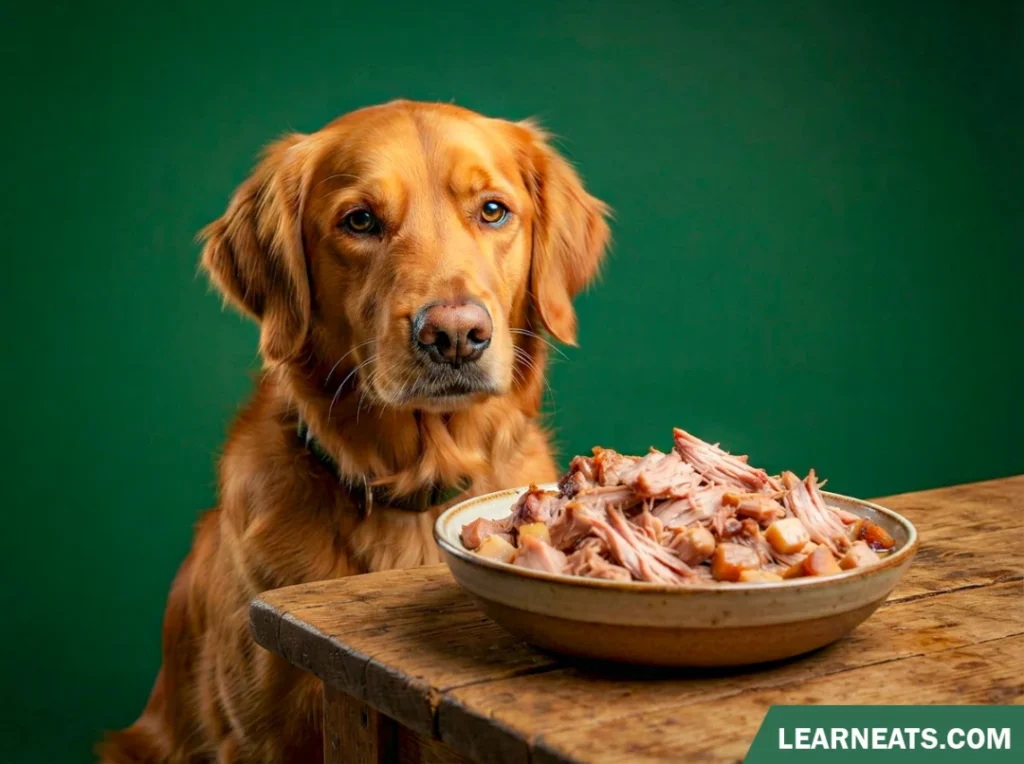
Can I Feed My Dog Raw Pork?
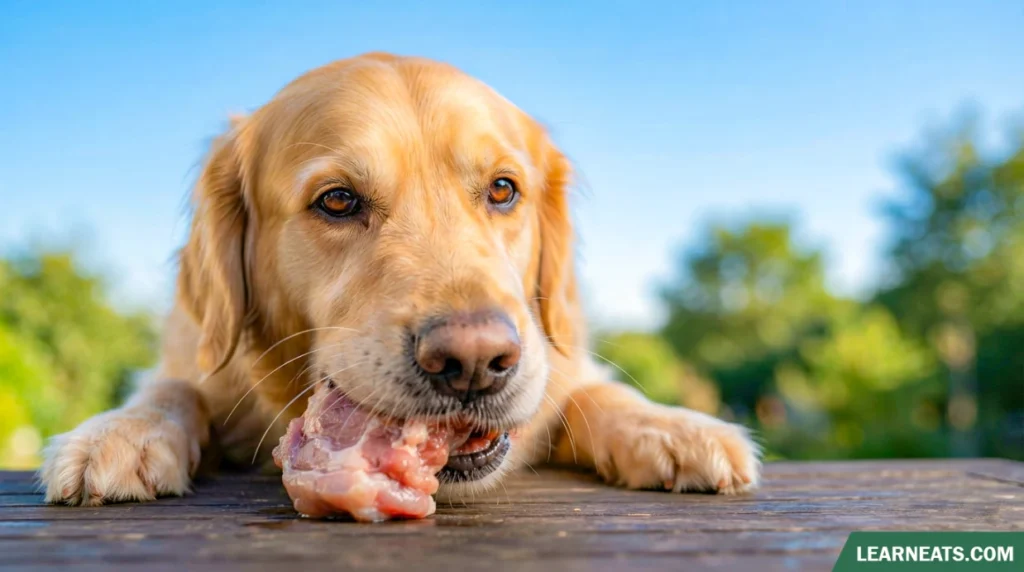
No. Raw or undercooked pork is not safe for dogs, and this is one of the clearest lines in pork safety. Raw pork can carry Trichinella spiralis, a parasite responsible for trichinosis. A dog that eats infected raw or undercooked pork muscle tissue can develop a parasitic infection, though symptoms in dogs tend to be milder than in humans.
Watch for these signs if a dog has eaten raw pork:
- Upset stomach or loss of appetite
- Vomiting
- Diarrhea
- Elevated fever
- Lethargy
- Muscle stiffness or pain
Dogs with weaker immune systems, including puppies and senior dogs, tend to show more pronounced symptoms. Can you feed raw pork to dogs as part of a raw diet trend? Some raw-feeding advocates do include it, but the safer, vet-recommended approach is to cook pork fully before it ever reaches a dog’s bowl.
Can I Feed My Dog Pork Chops?
Pork chops can be an occasional treat, provided they’re boneless, unseasoned, and trimmed of excess fat. The chop itself isn’t the problem — the seasoning rub, the bone, and the fatty edge are. Slice the cooked meat off the bone in small, boneless pieces before offering it.
Can I Feed My Dog Pork Rib Bones or Pork Chop Bones?
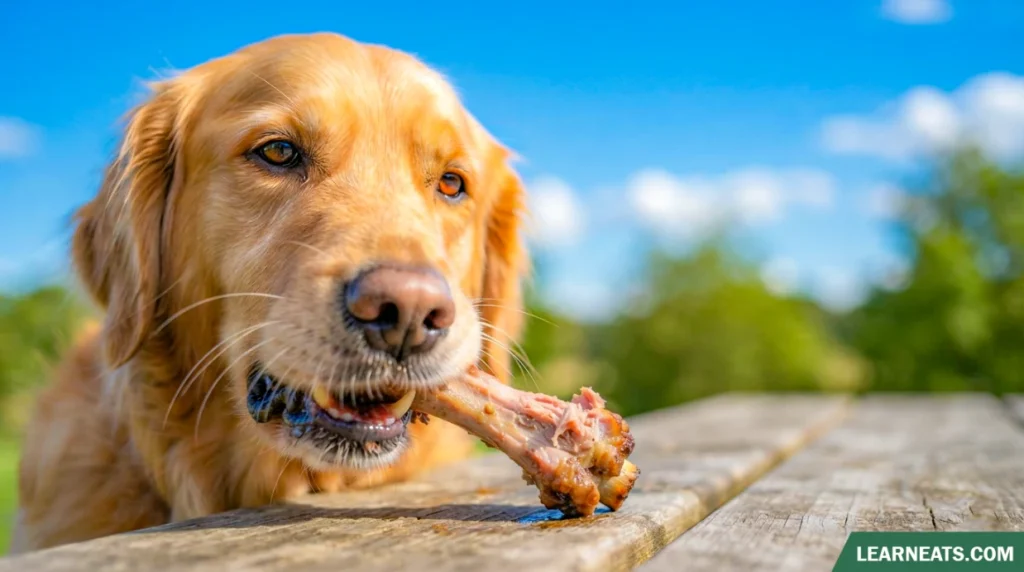
This is where many owners run into trouble. Pork rib bones and pork chop bones should never be given to a dog, cooked or raw. Once pork bones are cooked, they dry out and become brittle. When a dog chews on them, they can splinter into sharp fragments that cause:
- Choking
- Cuts or punctures in the mouth, throat, or esophagus
- Internal injuries to the stomach or intestines
- Blockages requiring emergency surgery
Raw bones splinter less often than cooked ones, but they still carry risk and aren’t considered a safe chew toy. A dental chew designed specifically for dogs is a far safer substitute for the leftover rib bone.
Should You Feed Dogs Pork Regularly?
Should you feed dogs pork as a staple protein? Most veterinary sources say no. Pork is naturally higher in fat than lean proteins like chicken, turkey, or white fish. That extra fat puts a dog’s pancreas under more strain, and repeated exposure raises the risk of pancreatitis — a painful, potentially serious inflammation of the pancreas that sometimes requires hospitalization.
Signs of pancreatitis in dogs include:
- Abdominal pain or a hunched posture
- Repeated vomiting
- Loss of appetite
- Lethargy
- Diarrhea
Dogs that are overweight, senior, or have a history of pancreatitis face a higher risk and should avoid pork or any fatty meat unless a veterinarian says otherwise.
Pork Safety Comparison Table
| Pork Type | Safe for Dogs? | Key Risk | Recommended Serving |
|---|---|---|---|
| Plain cooked pork loin/tenderloin | Yes, in moderation | Fat content | Small, boneless pieces, occasional treat |
| Pork chops (boneless, unseasoned) | Yes, in moderation | Fat, choking on bone fragments if bone-in | Trimmed, boneless, cut small |
| Raw pork | No | Trichinella spiralis (trichinosis) | Avoid entirely |
| Pork rib bones / chop bones | No | Splintering, choking, internal injury | Never feed; use dental chews instead |
| Bacon | No | Extremely high salt and fat; linked to pancreatitis | Avoid entirely |
| Ham | No | High sodium; risk of bloat and dehydration | Avoid entirely |
| Sausage | No | Salt, garlic, onion, preservatives | Avoid entirely |
| Seasoned or BBQ-sauced pork | No | Onion, garlic, sugar, excess sodium | Avoid entirely |

Can Dogs Eat Ham, Bacon, or Sausage?
No — these processed pork products should stay off the menu entirely. Bacon is loaded with salt and fat, and a dog that eats a large amount can develop pancreatitis, which can become life-threatening. Processed meats like bacon and sausage were also classified as known carcinogens by the World Health Organization in 2015, a finding that applies to long-term human health risk but underscores just how heavily processed these products are.
Ham carries its own separate danger: its high sodium content can cause excessive thirst and, in some cases, contribute to bloat — a condition where a dog’s stomach fills with gas or fluid and expands rapidly. Bloat is a genuine emergency and can be fatal without immediate treatment.
Feeding Pork to Dogs: Portion Guidance by Size
There’s no universal gram count that fits every dog, but a general rule holds up well: pork should never make up more than an occasional bite-sized treat, roughly the size of a few kibble pieces for small dogs and a golf-ball-sized portion for large breeds. It should never replace a balanced meal or become a daily habit.
- Small dogs (under 20 lbs): One or two small bites, once in a while
- Medium dogs (20–50 lbs): A few small, boneless pieces
- Large dogs (50+ lbs): A small handful of trimmed, boneless pork, still just occasionally
Introducing any new protein, including pork, should start with a tiny amount to watch for allergic reactions. Pork, rabbit, and lamb are among the proteins more commonly linked to food allergies in dogs than chicken or beef.
When to Call the Vet
Contact a veterinarian right away if a dog shows any of the following after eating pork:
- Repeated vomiting or diarrhea lasting more than a few hours
- Signs of abdominal pain, such as a hunched back or reluctance to move
- Difficulty breathing or swallowing
- Visible blood in vomit or stool
- Lethargy that doesn’t improve
- Known ingestion of a pork bone, ham, or heavily seasoned pork
Acting quickly on these signs can prevent a manageable issue from becoming a genuine emergency.
Healthier Alternatives to Pork
Lean, unseasoned proteins tend to sit better with most dogs than pork does. Consider these options instead:
- Plain boiled chicken — easy to digest, commonly recommended for dogs with upset stomachs
- Turkey — lean and rich in protein
- White fish — low in fat, gentle on the digestive system
- Lean beef — a good option in small, trimmed portions
Rotating in leaner proteins reduces the cumulative fat load on a dog’s pancreas while still offering variety.
Did you know that? Can Dogs Eat Raw Pork?
Frequently Asked Questions
Can you feed dogs pork?
Yes, dogs can eat pork as long as it’s fully cooked, unseasoned, and free of bones. The meat itself isn’t toxic, but fatty, raw, or seasoned pork carries real health risks.
Is it safe to feed dogs pork every day?
No, daily pork isn’t recommended. Its high fat content raises the risk of pancreatitis over time, so it’s better reserved as an occasional treat rather than a regular part of a dog’s diet.
Can I feed my dog pork chops?
Yes, boneless, unseasoned, cooked pork chops can be given in small amounts. Always trim excess fat and remove the bone completely before serving.
Can I feed my dog raw pork?
No, raw pork should never be fed to dogs. It can carry Trichinella spiralis, a parasite that causes trichinosis, along with a higher risk of harmful bacteria.
Can I feed my dog pork rib bones?
No, pork rib bones are unsafe for dogs, whether cooked or raw. Cooked bones splinter easily and can cause choking, internal punctures, or blockages that require surgery.
Can I feed my dog pork chop bones?
No, pork chop bones carry the same splintering risk as rib bones. A vet-approved dental chew is a much safer alternative for satisfying a dog’s urge to chew.
Can u feed dogs pork meat that’s been grilled with seasoning?
No, seasoned or marinated pork should be avoided. Common seasonings like garlic powder, onion powder, and nutmeg are toxic to dogs, even in small amounts.
Should you feed dogs pork as their main protein source?
No, pork isn’t ideal as a primary protein because of its fat content. Leaner options like chicken, turkey, or fish are generally better suited for everyday feeding.
Can dogs eat ham or bacon?
No, both should be avoided entirely. Bacon’s high fat and salt content raises pancreatitis risk, while ham’s sodium level can trigger excessive thirst and contribute to bloat.
What are the symptoms of pancreatitis after a dog eats fatty pork?
Symptoms include abdominal pain, repeated vomiting, lethargy, and loss of appetite. A veterinarian should be contacted promptly if these signs appear, since pancreatitis can become serious quickly.
Is it okay to feed a dog pork that’s part of a raw diet?
Cooking pork thoroughly is the safer choice even within a raw-feeding approach, since raw pork carries a parasitic infection risk that doesn’t apply to properly cooked meat.
What should I do if my dog eats a pork bone?
Monitor for choking, vomiting, or signs of pain, and contact a veterinarian right away, especially if the dog seems distressed or the bone was swallowed rather than chewed.