
This article is for informational purposes only and is not a substitute for professional veterinary advice, diagnosis, or treatment.
No, dogs should not eat raw sweet potatoes, and raw white potatoes carry an even bigger risk. Both are hard for a dog’s digestive system to break down in their raw state, and raw white potatoes contain a natural toxin called solanine that can make a dog seriously sick. Cooked, plain, and unseasoned is the only version of either vegetable that belongs in a dog’s bowl.
Pet parents often reach for sweet potatoes and potatoes because they’re already sitting in the kitchen, and the instinct to share a slice while cooking dinner is a natural one. Before that slice lands in a dog’s mouth, though, it helps to understand exactly what raw starch and raw nightshade vegetables do inside a canine gut, and why the answer changes so dramatically once heat is applied.
What Happens When a Dog Eats a Raw Sweet Potato
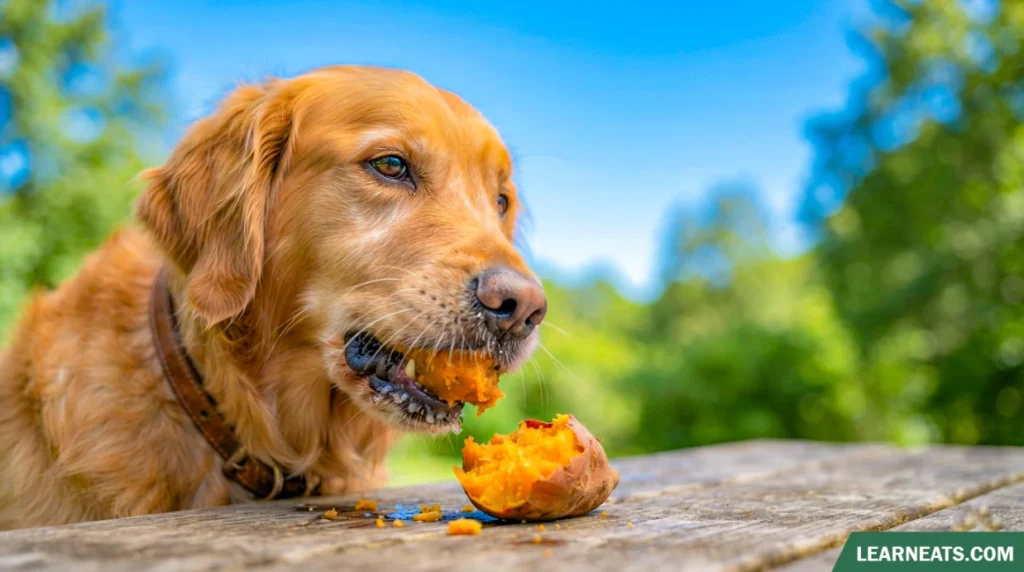
Sweet potatoes belong to the morning glory family, not the nightshade family, so they don’t carry solanine. That doesn’t make them harmless in their raw form. According to health experts at PetMD, feeding large amounts of raw sweet potato can trigger gas, bloating, vomiting, or diarrhea because the dense, fibrous flesh resists a dog’s digestive enzymes far more than it resists a human’s.
The bigger physical danger sits in the texture itself. A raw sweet potato is firm, almost woody, and dogs rarely chew their food the way people do. A hungry Labrador or an eager terrier tends to gulp rather than grind, and a chunk of raw sweet potato swallowed whole can lodge in the esophagus or work its way into the intestines, where it may cause a blockage. Veterinarians at the AKC describe raw sweet potato as difficult to chew and note it can upset a dog’s stomach while raising the risk of an intestinal obstruction, a warning echoed across nearly every major veterinary nutrition resource.
Small dogs and puppies face the highest stakes here. Their narrower digestive tracts leave far less room for error, so a piece of raw sweet potato that a large breed might pass without incident can fully obstruct a toy breed’s gut.

Why Raw Potatoes Are a Different, Riskier Story: Solanine Explained
White potatoes sit in the Solanaceae family alongside tomatoes, eggplant, and peppers. Every plant in that family produces glycoalkaloids, natural compounds the plant uses to fend off insects and disease. In potatoes, the two glycoalkaloids that matter most are solanine and chaconine, and both concentrate in the raw flesh, the skin, the sprouts, and the green-tinted patches that appear when a potato sees too much light.
Medical research suggests solanine works by inhibiting an enzyme called cholinesterase, which interferes with normal nerve signaling throughout the body. A peer-reviewed toxicology review on solanine explains that the compound builds up naturally in potato plants, sprouts, and tubers, and that ingestion has been documented to cause poisoning in both humans and animals. That same body of research links high exposure to a mix of digestive, neurological, and skin-related symptoms, occasionally severe enough to be life-threatening, which is precisely why raw potato should never be treated as an innocent kitchen scrap.
Cooking doesn’t eliminate glycoalkaloids entirely, but it does break down a meaningful portion of them, which is the core reason a boiled, plain potato is a very different food from a raw one. Frying does not offer the same benefit, since the oil, salt, and often the skin all stay intact.
Symptoms to Watch For After Raw Potato or Sweet Potato Ingestion
A dog that has eaten a small nibble of raw sweet potato may show nothing beyond mild gas. A dog that has eaten a raw potato, potato peel, or any green-tinged potato flesh needs closer observation, since solanine toxicity tends to build over several hours. Watch for:
- Vomiting or diarrhea
- Drooling or apparent nausea
- Lethargy or unusual weakness
- Loss of appetite
- Tremors or muscle twitching
- Dilated pupils
- Confusion or disorientation
- Rapid or labored breathing
Mild cases often resolve with rest and a bland diet under a veterinarian’s guidance. Severe cases, particularly involving green or sprouted potatoes, can progress to cardiovascular strain and warrant emergency treatment.
Raw vs. Cooked: A Side-by-Side Safety Breakdown
| Food Item | Raw Safety Level | Cooked Safety Level | Primary Risk | Recommended Prep |
|---|---|---|---|---|
| Sweet Potato Flesh | Unsafe | Safe in moderation | Choking, blockage, digestive upset | Peel, boil or bake, cut into small pieces |
| Sweet Potato Skin | Unsafe | Not recommended | Hard to digest, oxalate content | Remove before serving |
| White Potato Flesh | Unsafe | Safe in small amounts | Solanine and chaconine exposure | Peel, boil thoroughly, serve plain |
| White Potato Skin | Unsafe | Not recommended | Highest solanine concentration, oxalates | Discard skin entirely |
| Green or Sprouted Potato | Highly Toxic | Still Unsafe | Concentrated glycoalkaloids | Discard the entire potato |
| Potato Plant Leaves/Stems | Highly Toxic | Highly Toxic | Solanine poisoning | Never feed under any circumstance |
What To Do If Your Dog Just Ate a Raw Potato or Sweet Potato
A single small bite rarely causes an emergency, but the response should still be measured rather than dismissive.
- Identify the amount and type. A sliver of raw sweet potato is a very different situation than a half-eaten green potato pulled from the garden.
- Check for green coloring or sprouts. These indicate the highest glycoalkaloid concentration and raise the urgency significantly.
- Watch the clock. Solanine symptoms can take 6 to 12 hours to appear, so a dog that seems fine immediately after eating isn’t necessarily in the clear.
- Call a veterinarian or an animal poison control hotline if the dog ate more than a small nibble, ate any green or sprouted potato, or begins showing any of the symptoms listed above.
- Do not induce vomiting unless a veterinary professional specifically instructs it, since timing and technique matter for safety.
Keeping the packaging, a photo of the potato, or an estimate of the amount consumed helps a veterinarian assess risk quickly.

How to Prepare Sweet Potatoes and Potatoes Safely for Dogs
Serving either vegetable safely comes down to three consistent rules: cook it, skin it, and keep it plain.
- Boil or bake, never fry. Boiling softens the flesh and reduces glycoalkaloid content in potatoes; baking works well for sweet potatoes without adding fat.
- Remove the skin. Both potato and sweet potato skins carry oxalates that can strain the kidneys with repeated exposure, on top of being harder to digest.
- Skip the extras. Butter, salt, sugar, cinnamon, and garlic-based seasonings have no place in a dog bowl, and garlic in particular is toxic on its own.
- Cut to size. Bite-sized cubes or a smooth mash reduce choking risk far more than large chunks.
- Treat it as an extra, not a meal. Even the safe, cooked version should stay within roughly 10 percent of a dog’s daily caloric intake, consistent with general treat-feeding guidance from veterinary nutritionists.
Potato and Sweet Potato Skins: Raw vs. Cooked
Skins deserve their own callout because so many pet owners assume peeling is optional. It isn’t. Raw potato skin holds the highest glycoalkaloid concentration of the entire tuber, and even cooked skin retains a fibrous, oxalate-rich structure that offers little benefit and real long-term risk to kidney health when fed regularly. Sweet potato skin isn’t toxic in the same way, but it remains tough and harder to break down, so most veterinary sources recommend discarding it regardless of preparation method.
Special Cases: Puppies, Diabetic Dogs, and Small Breeds
Puppies have smaller airways, narrower intestines, and less digestive resilience than adult dogs, which makes both the choking risk and the toxin sensitivity higher. Any potato or sweet potato introduced to a puppy’s diet should be cooked, mashed, and offered in a tiny test amount first.
Diabetic dogs need a conversation with their veterinarian before either vegetable enters the diet, since sweet potatoes and potatoes both carry a meaningful carbohydrate load that can affect blood sugar regulation. Small and toy breeds carry the highest blockage risk from raw pieces of either vegetable simply due to the scale of their digestive tract, so extra caution around portion size matters more for a Chihuahua than for a Mastiff.
Did you know that? Can Dogs Eat Potato Skins?
Frequently Asked Questions
Can dogs eat raw sweet potatoes?
No. Raw sweet potato is difficult for dogs to chew and digest, and it carries a real risk of choking or intestinal blockage. Cooked, plain sweet potato without the skin is the safe alternative.
Can dogs have raw potatoes at all?
Raw potatoes should be avoided entirely. They contain solanine and chaconine, two glycoalkaloids that can cause gastrointestinal and neurological symptoms even in relatively small amounts.
Are raw potatoes toxic to dogs?
Yes, raw potatoes are toxic to some degree because of their solanine content, and the toxicity increases sharply if the potato has turned green or sprouted. Cooking reduces but does not fully eliminate this risk.
What is solanine, and why does it matter for dogs?
Solanine is a natural glycoalkaloid produced by potato plants as a defense against pests. It interferes with normal nerve function and can trigger vomiting, tremors, and weakness in dogs that consume enough of it.
Can dogs eat raw potato skins?
No. Potato skin holds the highest concentration of solanine in the entire tuber, making it the riskiest part of the potato for a dog to ingest raw.
My dog ate a raw potato. What should I do?
Note how much was eaten and whether the potato was green or sprouted, then monitor for vomiting, lethargy, or tremors over the next several hours. Contact a veterinarian promptly if the amount was significant or symptoms appear.
How much raw potato is dangerous for a dog?
There’s no universally safe threshold, since toxin concentration varies by potato and by the dog’s size. A small nibble of a healthy, non-green potato is unlikely to cause serious harm, but any amount of green or sprouted potato warrants a veterinary call.
Can dogs eat raw potatoes without the skin?
Removing the skin lowers the solanine load slightly, but the flesh still contains enough of the compound to pose a risk raw. Cooking remains the necessary step, not just peeling.
Are raw potatoes ever good for dogs in any amount?
No nutritional benefit outweighs the solanine risk in raw form. Any nutritional value potatoes offer, such as potassium and vitamin C, is better and more safely obtained from the cooked version.
Can puppies eat raw sweet potatoes?
Puppies should never eat raw sweet potato. Their smaller digestive tracts make both the choking hazard and the digestive upset more severe than in adult dogs.
What are the symptoms of solanine poisoning in dogs?
Common signs include vomiting, diarrhea, drooling, lethargy, tremors, dilated pupils, and disorientation. Severe cases can involve breathing difficulty and cardiovascular strain, which requires immediate veterinary attention.
Is cooked potato skin safe for dogs?
It’s not recommended even after cooking. The skin remains fibrous, holds residual solanine, and contains oxalates that can affect kidney health with repeated feeding.