
This article is for general informational purposes only and does not replace personalized advice from a licensed veterinarian.
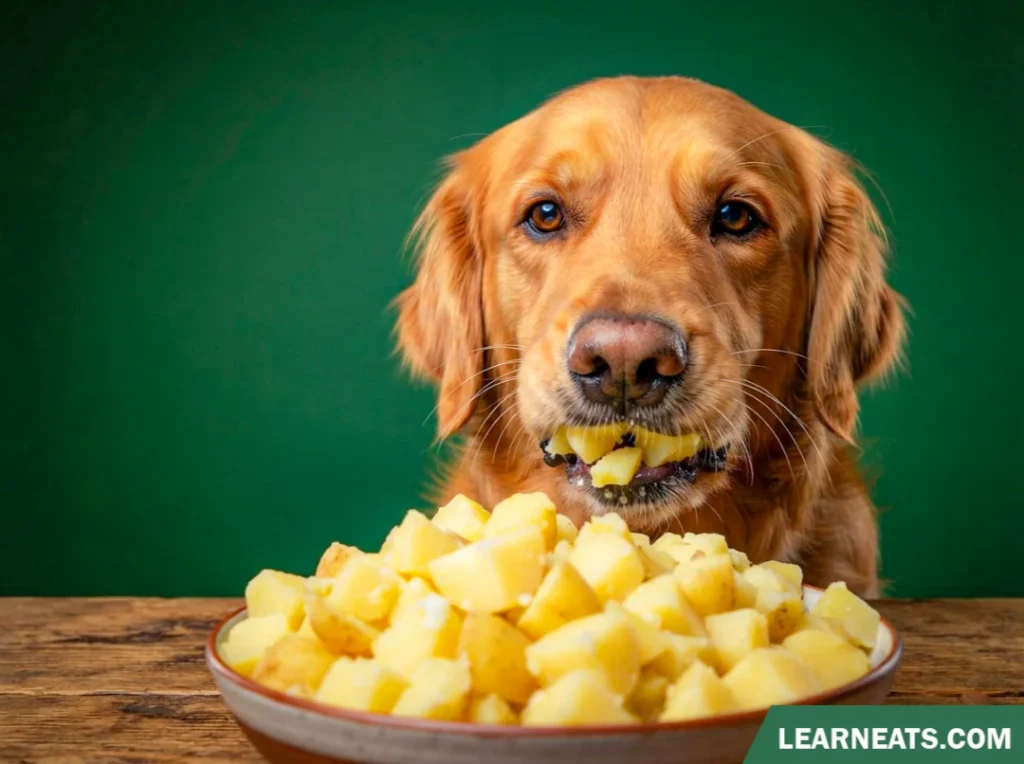
Yes, dogs can eat cooked potatoes. Plain, fully cooked white or sweet potatoes served without butter, salt, or seasoning are safe for most healthy dogs in small amounts. Raw potatoes and any green-tinged skin, however, should stay off the menu entirely, since they carry a natural toxin that cooking helps neutralize.
If your pup has ever given you those pleading eyes while you mash a pot of potatoes for dinner, you already know the temptation to share. The good news: a small spoonful of the plain stuff is generally fine. The details matter, though, and getting them wrong can lead to anything from an upset stomach to a trip to the emergency vet.
Are Cooked Potatoes Safe for Dogs? The Short Answer
Cooked, unseasoned potatoes are considered a safe occasional treat for dogs. According to the American Kennel Club, boiled or baked potatoes can offer real health benefits, including support for a dog’s immune system, but overfeeding them can contribute to weight gain and other problems. Dr. Patricia Kennedy, a veterinarian who has practiced for more than four decades, notes that cooked potatoes are fine for dogs as long as they aren’t loaded with butter, since rich, fatty toppings can trigger pancreatitis.
The takeaway: cooking is the safety switch. It is not the type of potato that makes the biggest difference, it is how the potato is prepared and how much your dog eats.
Why Cooking Matters: The Solanine Problem
Potatoes belong to the nightshade family, along with tomatoes and eggplants. Every member of this plant family naturally produces a defensive compound called solanine, a glycoalkaloid the plant uses to ward off insects and predators.
In potatoes, solanine concentrates in three places:
- The skin, especially any spots that have turned green
- Sprouts and “eyes”
- Raw flesh, particularly in immature or unripe tubers
Raw potatoes also contain a related compound called chaconine. Together, these toxins can irritate the digestive tract and, in significant amounts, affect the nervous system and kidney function. Heat breaks solanine down substantially, which is exactly why boiling, baking, or steaming a potato makes it dramatically safer than feeding it raw.
This is also why green potatoes are a hard no, no matter how they’re cooked. Cooking reduces solanine, but it does not eliminate high concentrations entirely, so a potato with visible green skin should be thrown out rather than served to your dog.
Nutritional Benefits of Cooked Potatoes for Dogs
Fed correctly and in moderation, potatoes bring more to the bowl than empty starch:
- Fiber — Supports digestive regularity and gut health
- Potassium — Contributes to healthy muscle and nerve function
- Vitamin C — An antioxidant that supports the immune system
- Vitamin B6 — Involved in metabolism and red blood cell production
- Quick, digestible energy — Cooked potato starch is generally easy for dogs to break down
Sweet potatoes edge out white potatoes on the nutrition scoreboard. They’re notably rich in beta-carotene, which the body converts to vitamin A, and they tend to have a slightly lower glycemic impact than white potatoes when served plain. That’s one reason sweet potato shows up as an ingredient in many commercial dog foods.
Still, a dog’s body is built to thrive primarily on animal-based protein. Potatoes, regardless of type, should sit firmly in the “occasional extra” category, not the foundation of a meal.
Potential Risks and Side Effects
Even cooked, plain potatoes come with a few caveats worth taking seriously.
Weight gain. Potatoes are calorie-dense and starchy. A dog who regularly gets potato scraps on top of a complete diet can pack on excess weight over time, which raises the risk of joint problems, diabetes, and heart strain.
Blood sugar spikes. Potatoes sit relatively high on the glycemic index, meaning they can raise blood sugar quickly after eating. For a healthy dog, an occasional small serving usually isn’t an issue. For a diabetic dog, that same serving can complicate blood-sugar control, so potatoes are best avoided in these cases unless a vet says otherwise.
Pancreatitis risk from toppings. The potato itself is rarely the problem, the butter, gravy, sour cream, or bacon bits are. Fatty additions are a well-known trigger for pancreatitis, a painful and sometimes serious inflammation of the pancreas.
Sodium overload. Salted potatoes, chips, and fries deliver far more sodium than a dog needs. Large amounts of salt can cause excessive thirst, vomiting, diarrhea, tremors, and in severe cases, sodium ion poisoning.
Choking and blockage. Raw potato chunks are hard and dense. Beyond the solanine concern, they’re difficult to chew properly and can pose a choking hazard or, in large pieces, an intestinal obstruction risk, particularly in smaller breeds.
Solanine poisoning. Rare, but real. Symptoms include vomiting, diarrhea, hypersalivation, weakness, lethargy, a slow heart rate, and in more serious cases, tremors or other neurological signs. This is almost always tied to raw potatoes, green potatoes, or the potato plant itself, not properly cooked flesh.
Cooked Potato Safety Comparison Table
| Potato Form | Safety Level | Key Concern | Recommended Frequency |
|---|---|---|---|
| Plain boiled or baked potato (no skin) | Safe | Weight gain if overfed | Occasional treat, small amount |
| Plain cooked sweet potato | Safe, most nutritious | High glycemic index | Occasional treat, small amount |
| Cooked potato skin (no green spots) | Use caution | Harder to digest, some residual solanine | Rare, small piece only |
| Green or sprouted potato (any prep) | Unsafe | High solanine/chaconine, toxicity risk | Avoid entirely |
| Raw potato or raw skin | Unsafe | Solanine poisoning, choking, blockage | Avoid entirely |
| Mashed potatoes with butter/milk | Risky | Fat content, pancreatitis risk | Avoid, or offer plain portion only |
| French fries or potato chips | Unsafe as a regular food | Excess salt, oil, seasoning (garlic/onion powder) | Avoid as a rule |
| Potatoes as a diet staple/filler | Not recommended | Displaces balanced nutrition, calorie overload | Not a substitute for dog food |
How to Cook Potatoes for Dogs Safely
If you’d like to prepare potatoes specifically for your dog, keep the process simple.
- Choose a firm, unblemished potato. Skip any with green patches or sprouted eyes.
- Peel it. Removing the skin cuts down on residual solanine and makes the potato easier to digest.
- Cook it plain. Boiling, baking, or steaming all work. Avoid frying, and never add butter, oil, salt, garlic, onion, or other seasonings.
- Cool and cut it down. Chop or mash the potato into small, dog-appropriate pieces once it has cooled to avoid burns.
- Serve as a topper, not a meal. A small spoonful mixed into regular food is plenty.
Medical research suggests moderation is the operative word with any starchy treat: potatoes should not exceed roughly 10 percent of a dog’s daily calorie intake, whether served on their own or as part of a homemade topper.

Can Dogs Eat Potato Skins?
This is where sources diverge slightly, and for good reason: skins carry more concentrated solanine than the flesh underneath. Some veterinarians consider a small piece of plain, fully cooked skin from a healthy, unblemished potato to be low-risk. Others advise skipping skins altogether, since they’re tougher to digest and harder to visually confirm as green-spot-free once cooked.
The safest approach is to peel potatoes before cooking them for your dog, especially with sweet potatoes, whose skins can be particularly difficult to digest even after cooking. If a small amount of skin ends up in your dog’s bowl by accident and the potato showed no green coloring, it’s unlikely to cause harm, but it shouldn’t become a habit.
Can Dogs Eat Cooked Sweet Potatoes?
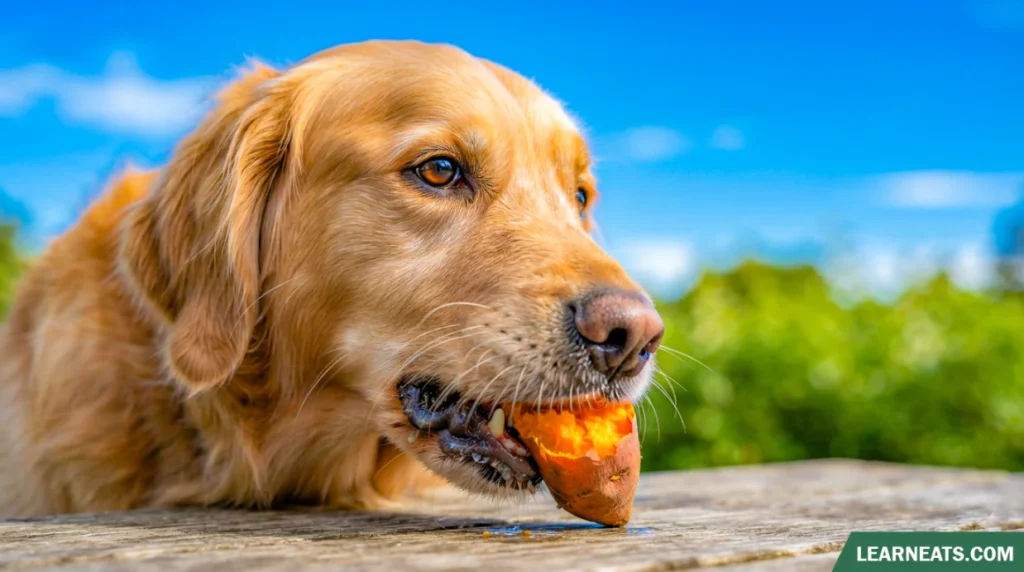
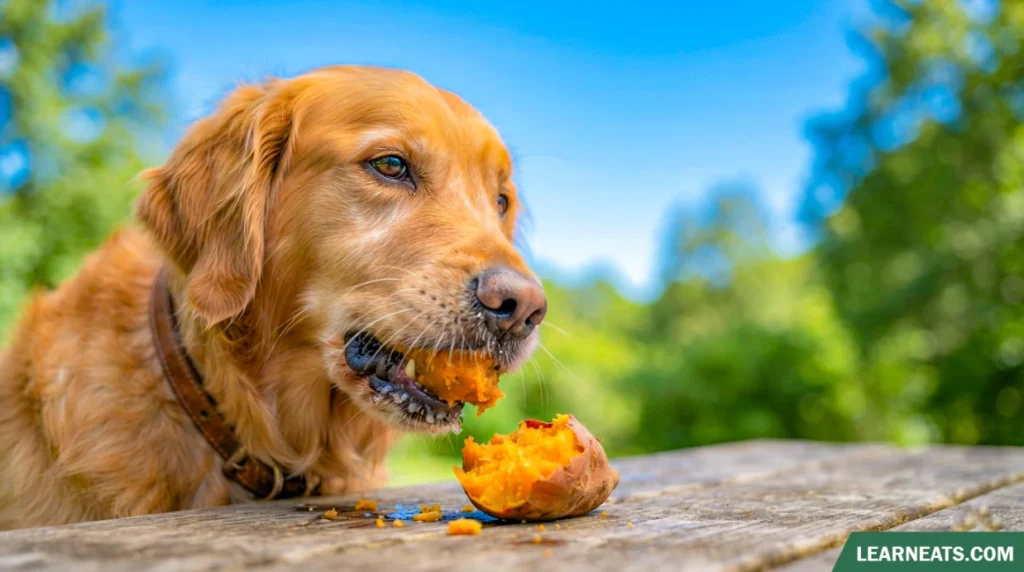
Yes, and sweet potatoes are often the preferred choice between the two. Cooked, peeled sweet potato is a common ingredient in commercial dog foods thanks to its fiber and beta-carotene content. As with white potatoes, the rules stay the same: fully cooked, plain, skin removed, and offered in modest portions. Sweet potato still carries meaningful carbohydrates, so it’s not a free pass for dogs managing weight or blood sugar.
Serving Size Guidelines by Dog Size
There’s no single official dosage chart for potatoes, since every dog’s calorie needs differ, but a reasonable starting point looks like this:
- Small dogs (under 20 lbs): A teaspoon to a tablespoon of plain cooked potato, occasionally
- Medium dogs (20–50 lbs): One to two tablespoons, occasionally
- Large dogs (50+ lbs): Up to a quarter cup, occasionally
Introduce any new food gradually and watch for soft stool or digestive upset over the following 24 hours. If your dog tolerates it well, it can remain an occasional addition to their routine.
Dogs With Health Conditions: Extra Caution Needed
Certain dogs should have potatoes limited or removed entirely from their diet:
- Diabetic dogs — The high glycemic load can interfere with blood sugar management
- Overweight or obese dogs — Extra carbohydrate calories work against weight-loss goals
- Dogs with a history of pancreatitis — Even a plain potato carries some risk if fat is added; buttered or fried versions should be avoided completely
- Dogs on a prescription or therapeutic diet — Any food outside the prescribed plan should be cleared with a veterinarian first
If your dog falls into any of these categories, talk with a veterinarian before adding potatoes of any kind to their routine.
When to Call the Vet
Contact a veterinarian promptly if your dog eats raw potato, potato plant material, or a large amount of green-skinned potato, even if no symptoms appear right away. Watch for:
- Vomiting or diarrhea
- Drooling or apparent nausea
- Weakness or unusual lethargy
- Tremors
- Slow heart rate or disorientation
These signs can indicate solanine toxicity and warrant a call to your vet or an animal poison control hotline right away.
Did you know that? Can Dogs Eat Mashed Potatoes?
Frequently Asked Questions
Can dogs eat cooked potatoes every day?
No. Cooked potatoes should stay an occasional treat rather than a daily addition. Regular feeding can contribute to weight gain and unwanted blood sugar spikes, especially in dogs that aren’t very active.
Can dogs eat cooked potato skins?
A small amount of skin from a plain, fully cooked, unblemished potato is generally low-risk, but skins carry more solanine than the flesh and are harder to digest. Peeling the potato before cooking is the safer choice.
Are cooked sweet potatoes better for dogs than white potatoes?
Sweet potatoes are generally considered more nutritious, offering more fiber and beta-carotene, but both need to be cooked plain and fed in moderation. Neither should replace a balanced commercial diet.
Can puppies eat cooked potatoes?
Puppies can have a small amount of plain, fully cooked potato as an occasional treat, but it shouldn’t replace their regular puppy food, which is formulated for their specific growth needs. Check with a vet if introducing any new food during the growth stage.
Can dogs eat mashed potatoes?
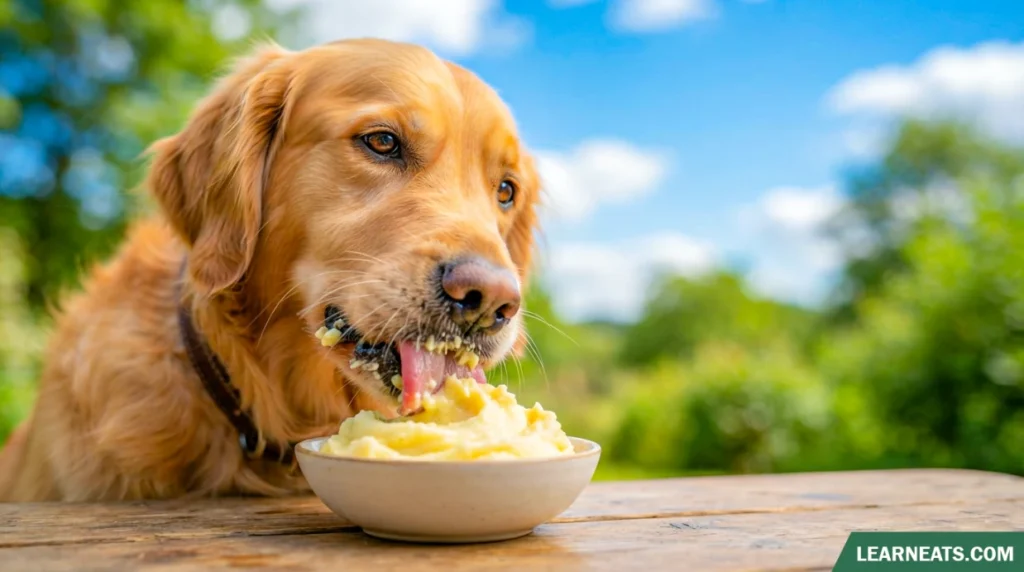
Plain mashed potato without butter, milk, salt, or gravy is fine in small amounts. The typical additions used to make mashed potatoes taste good, like butter and cream, are the real risk, since they can trigger digestive upset or pancreatitis.
Is it safe for dogs to eat boiled potatoes?
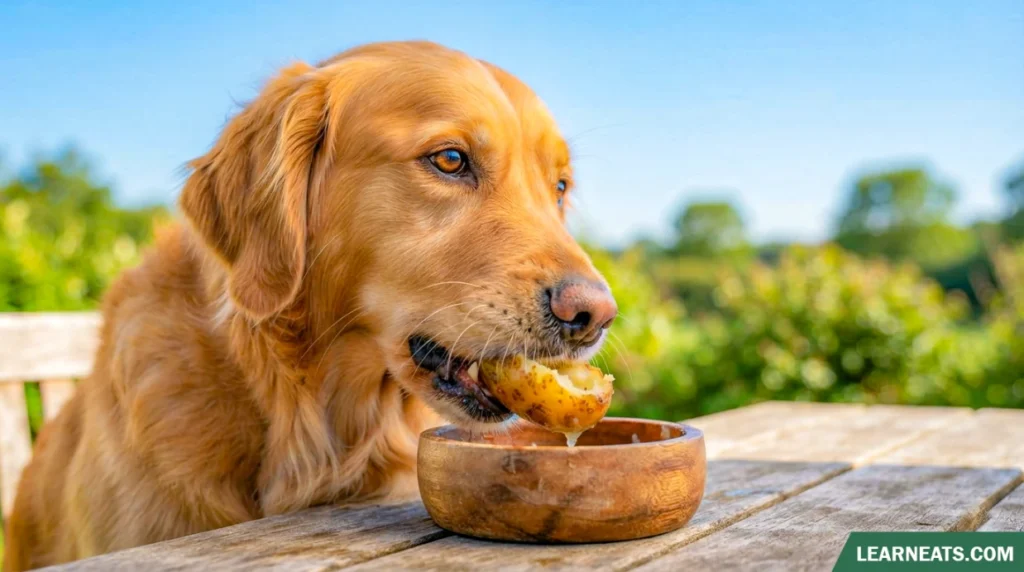
Yes, boiled potatoes served plain and unsalted are one of the safer preparation methods, as long as the potato itself shows no green coloring and is offered in a modest portion.
Can dogs eat raw potatoes?
No. Raw potatoes contain higher levels of solanine and chaconine than cooked ones and are also hard to digest, which raises the risk of both toxicity and choking or blockage. Always cook potatoes fully before offering them to a dog.
Can dogs eat raw potatoes?
No. Raw potatoes contain higher levels of solanine and chaconine than cooked ones and are also hard to digest, which raises the risk of both toxicity and choking or blockage. Always cook potatoes fully before offering them to a dog.
What happens if a dog eats a green potato?
Green potatoes and their skins contain elevated solanine levels that cooking may not fully eliminate. Watch for vomiting, diarrhea, drooling, weakness, or lethargy, and contact a veterinarian promptly if your dog has eaten one.
How much cooked potato can a dog eat safely?
A general guideline is a teaspoon to a tablespoon for small dogs and up to about a quarter cup for large dogs, offered occasionally rather than daily. Potatoes should make up no more than roughly 10 percent of a dog’s overall calorie intake.
Can dogs with diabetes eat cooked potatoes?
It’s best to avoid potatoes for diabetic dogs unless a veterinarian specifically approves it. Their relatively high glycemic index can make blood sugar harder to manage.
Can dogs eat French fries or potato chips?
These aren’t recommended as regular food. Fries and chips are typically fried in oil and heavily salted, and chips often carry additional seasonings, all of which can lead to digestive upset, sodium issues, or pancreatitis over time.
Do cooked potatoes cause allergies in dogs?
True potato allergies are uncommon in dogs, but any new food can trigger sensitivity in an individual animal. Introduce small amounts first and watch for itching, digestive upset, or skin irritation.