This article is for general educational purposes only and does not replace personalized veterinary advice; always consult a licensed veterinarian before giving your dog any new supplement.
Yes, dogs can eat turkey tail mushrooms, and most veterinarians consider the properly prepared, supplement-grade version safe. Turkey tail (scientific name Trametes versicolor, also called Coriolus versicolor) is one of the most studied medicinal mushrooms in veterinary medicine, largely because of a widely cited canine cancer trial. That said, safety depends entirely on the source, the preparation, and the dose — raw, wild-picked mushrooms are a different story entirely, and this guide breaks down exactly where the line sits.
What Is Turkey Tail Mushroom?
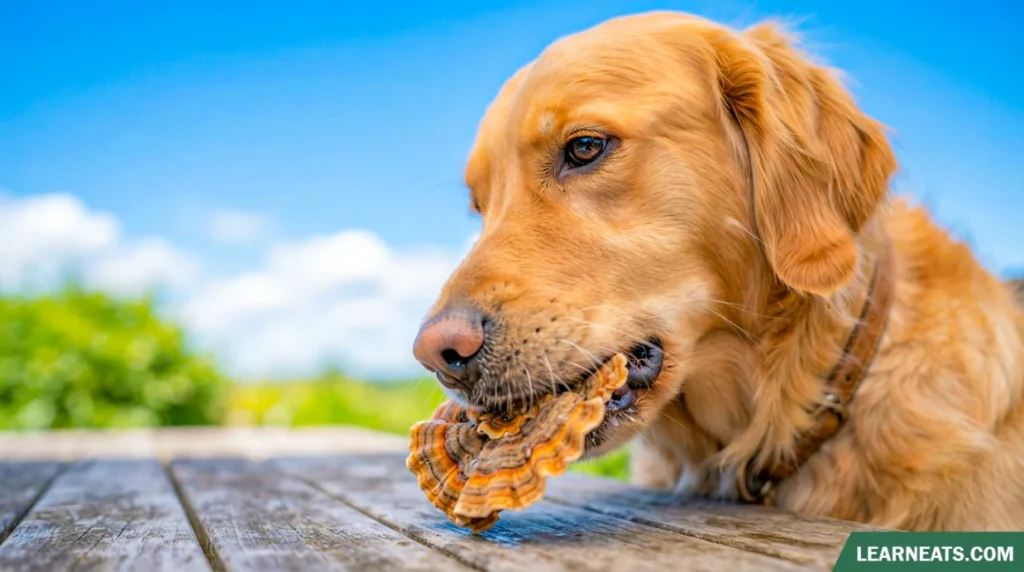
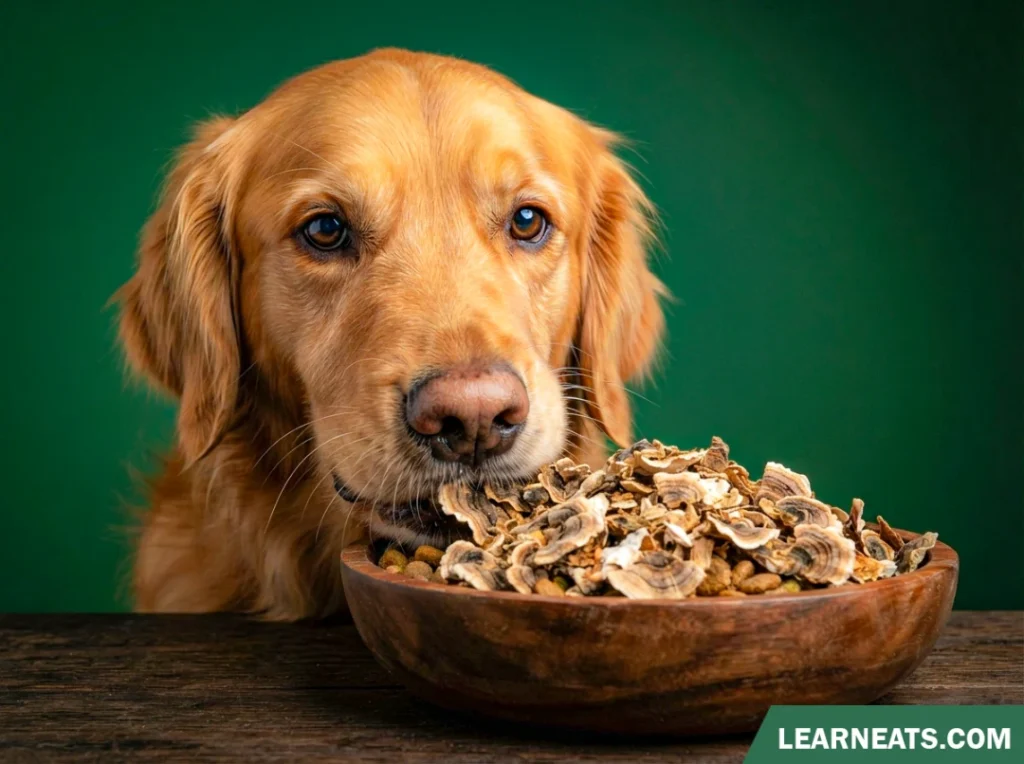
Turkey tail gets its name from the fan-shaped, banded cap that resembles the tail feathers of a wild turkey. It grows on dead or decaying tree logs across North America, Europe, and Asia, and it has been used in traditional Chinese medicine for centuries under the name Yun Zhi.
What sets turkey tail apart from most fungi on the forest floor is its concentration of two bioactive compounds:
- Polysaccharide-K (PSK) — the Japanese-derived extract, approved as an adjunct cancer therapy in Japan
- Polysaccharopeptide (PSP) — the Chinese-derived counterpart, and the specific compound used in the most-cited canine study
Both are protein-bound beta-glucans, a type of soluble fiber that binds to receptors on immune cells and appears to help modulate immune response. This is the mechanism behind almost every claimed benefit of turkey tail, in dogs and humans alike.
Can Dogs Eat Turkey Tail Mushrooms Safely?
Short answer: yes, when it comes from a reputable, pet-specific supplement — not from a backyard or forest floor.
Veterinary integrative medicine specialists generally distinguish between three categories:
- Commercial turkey tail supplements (powders, capsules, tinctures made from the fruiting body via hot-water extraction) — considered safe for most healthy adult dogs
- Cooked turkey tail added to food in small, controlled amounts — generally tolerated, though less standardized in potency
- Wild-foraged raw turkey tail — not recommended, due to misidentification risk and potential contamination with heavy metals like arsenic, lead, and cadmium, which mushrooms absorb readily from soil
According to health experts in veterinary oncology, the mushroom itself is not toxic to dogs the way some other fungi are. The concern is less about the species and more about sourcing, dosage accuracy, and interactions with existing medications or conditions.
The Science: What the Research Actually Shows
Medical research suggests turkey tail’s reputation in veterinary medicine is built primarily on one landmark study — and it deserves an honest look, including its limitations.
In 2012, researchers Dorothy Cimino Brown and Jennifer Reetz at the University of Pennsylvania School of Veterinary Medicine published a double-blind, randomized pilot study on dogs with naturally occurring splenic hemangiosarcoma, a fast-spreading and typically fatal blood vessel cancer. Fifteen dogs were split into three dosing groups and given I’m-Yunity, a standardized PSP extract, with no surgery, chemotherapy, or other concurrent treatment.
The results were notable: dogs in the high-dose group reached abdominal metastasis at a median of 112 days, compared to just 30 days in the lower-dose control group — a statistically significant difference. The research team reported that the highest PSP dose meaningfully slowed cancer spread and produced longer survival times than had previously been documented for this specific cancer in dogs. The full peer-reviewed paper, published in Evidence-Based Complementary and Alternative Medicine, is archived on the National Center for Biotechnology Information (NCBI).
That said, good science requires balance. A larger, later National Institutes of Health–funded follow-up trial compared PSP against standard chemotherapy (doxorubicin) in a bigger cohort of dogs with hemangiosarcoma and did not find a survival advantage for PSP alone over conventional treatment. Veterinary oncologists now generally frame turkey tail as a possible adjunct to conventional cancer care, not a replacement for it — a distinction every pet owner should understand before making treatment decisions.
Potential Health Benefits for Dogs
Beyond the cancer research, turkey tail is used in holistic veterinary practice for several supporting roles:
- Immune system support — beta-glucans bind to immune cell receptors and may help normalize immune response, which is part of why some oncologists use it alongside chemotherapy to offset immune suppression
- Gut health — as a soluble fiber, turkey tail acts as a prebiotic, feeding beneficial gut bacteria while limiting harmful strains
- Inflammation support — some practitioners use it for mild inflammatory conditions of the digestive or urinary tract
- Senior dog wellness — antioxidant content may help offset general cellular stress in aging dogs, though this claim has far less dedicated canine research than the cancer studies above
Turkey tail is not marketed or evidence-supported as a treatment for acute illness, and it is not a substitute for antibiotics, chemotherapy, or emergency veterinary care.
Turkey Tail for Dogs: Quick Reference Table
| Factor | Details |
|---|---|
| Common Names | Turkey tail, Trametes versicolor, Coriolus versicolor, Yun Zhi, cloud mushroom |
| Key Active Compounds | PSK (polysaccharide-K), PSP (polysaccharopeptide), beta-glucans |
| Typical Dosage Range | ~20–30 mg beta-glucans per kg of body weight daily (practical wellness dose); up to 100 mg/kg/day of PSP extract used under study conditions |
| Best Form | Hot-water extract powder or capsule from the fruiting body |
| Forms to Avoid | Raw wild-harvested mushrooms; mycelium-on-grain fillers with low beta-glucan content |
| Common Side Effects | Mild diarrhea, gas, vomiting, temporary appetite change |
| Rare Side Effects | Allergic reaction (itching, facial swelling, hives) |
| Special Precautions | Diabetic dogs (may affect blood glucose), dogs on immunosuppressants, pregnant or nursing dogs |
| FDA Regulation Status | Not FDA-approved or regulated as a drug for dogs; sold as a supplement |
| Overall Safety Rating | Generally safe as a quality-tested supplement; unsafe if wild-foraged or unregulated |

How to Safely Introduce Turkey Tail Mushroom to Your Dog
A gradual approach protects a dog’s digestive system and makes it easier to spot any reaction:
- Talk to the veterinarian first, especially if the dog has a diagnosed illness, takes daily medication, or is pregnant or nursing.
- Start low. Begin with a fraction of the label’s suggested dose for the dog’s weight for the first 3 to 7 days.
- Watch the stool and appetite. Loose stool or mild gas in the first week is common as the gut microbiome adjusts; it typically resolves on its own.
- Increase gradually to the full recommended dose if no adverse signs appear.
- Choose third-party-tested products that state the actual beta-glucan percentage, not just “mushroom powder” by weight.
- Cycle the supplement — many integrative vets recommend giving it for six to eight weeks, then pausing for two to four weeks, to avoid over-stimulating the immune system.
Side Effects and Warning Signs to Watch For
Even a generally well-tolerated supplement can cause problems in an individual dog. Contact a veterinarian promptly if any of the following appear after starting turkey tail:
- Persistent vomiting or diarrhea lasting more than 48 hours
- Facial swelling, hives, or intense itching
- Sudden lethargy or refusal to eat
- Unusual changes in thirst or urination in diabetic dogs
Dogs with autoimmune conditions or those taking immunosuppressive drugs should only use turkey tail under direct veterinary supervision, since its immune-stimulating action could theoretically counteract those medications.
What to Avoid: Wild Mushrooms and Unverified Products
Never let a dog eat turkey tail (or any mushroom) foraged from a yard, park, or trail. Correct identification of Trametes versicolor requires expertise, and it commonly grows alongside toxic lookalike species. Wild fungi can also concentrate environmental toxins, including heavy metals, from the wood and soil they grow in. Supplement-grade turkey tail sourced from a company that publishes third-party lab testing removes this risk entirely.
The Bottom Line
Turkey tail mushroom has a stronger scientific track record than most dog supplements on the market, largely thanks to peer-reviewed veterinary oncology research — but it works best as a supporting tool, not a cure, and only in a quality-controlled form. A conversation with a veterinarian before starting, especially for dogs with existing health conditions, remains the single most important safety step.
Did you know that? Can Dogs Eat Turkey Gizzards?
Frequently Asked Questions
Can dogs eat turkey tail mushrooms every day?
Yes, many integrative veterinarians consider daily use appropriate for extended periods, though cycling the supplement (six to eight weeks on, then a short break) is often recommended. Daily dosing should always follow label guidance based on the dog’s body weight.
Is turkey tail mushroom the same as the mushrooms found in grocery stores?
No. Turkey tail is a thin, leathery, fan-shaped fungus that grows on wood and is rarely sold fresh for cooking. It is almost always given to dogs as a processed powder, capsule, or tincture rather than a fresh culinary mushroom.
Can turkey tail mushroom cure cancer in dogs?
No. Research, including the University of Pennsylvania hemangiosarcoma study, shows it may delay metastasis and support survival time in specific cases, but it is not a cure and does not replace conventional veterinary cancer treatment.
What dose of turkey tail is safe for a small dog?
Dosage should be calculated by body weight, generally in the range of 20 to 30 mg of beta-glucans per kilogram daily for general wellness use. A veterinarian or the product label should confirm the exact amount for a specific dog’s weight and health status.
Can puppies have turkey tail mushroom?
There is limited research on turkey tail use in puppies. Most veterinary guidance recommends waiting until a dog reaches adulthood, or consulting a vet first, since a puppy’s immune system and organs are still developing.
Does turkey tail mushroom interact with dog medications?
It may interact with immunosuppressant drugs and could affect blood glucose regulation in diabetic dogs. Any dog on chronic medication should only start turkey tail under veterinary guidance.
What are the signs my dog is having a bad reaction to turkey tail?
Watch for persistent vomiting, diarrhea lasting more than two days, facial swelling, hives, or sudden lethargy. Discontinue use immediately and contact a veterinarian if any of these appear.
Is turkey tail mushroom the same as reishi or lion’s mane for dogs?
No. Turkey tail, reishi, and lion’s mane are different medicinal mushroom species with overlapping but distinct benefits — turkey tail is best researched for immune modulation and hemangiosarcoma support, while reishi is often used for calming effects and lion’s mane for cognitive support.
Can turkey tail mushroom help with a dog’s allergies?
Some pet owners report improved skin and coat condition due to turkey tail’s prebiotic effect on gut health, since gut health influences immune regulation. However, direct clinical evidence for allergy treatment in dogs specifically is limited.
How long does it take to see results from turkey tail mushroom in dogs?
Most integrative veterinarians suggest allowing four to eight weeks of consistent use before evaluating changes in energy, coat condition, or digestive health. Cancer-related studies used it over a period of weeks to months alongside monitoring.
Should turkey tail mushroom replace chemotherapy for a dog with cancer?
No. Even the original University of Pennsylvania research team and subsequent larger trials position PSP as an adjunct, not a replacement for conventional oncology treatment such as surgery, chemotherapy, or radiation.
Where should I buy turkey tail mushroom supplements for my dog?
Look for pet-specific brands that disclose the exact beta-glucan percentage, use fruiting-body hot-water extraction rather than mycelium-on-grain fillers, and publish third-party lab testing for contaminants like heavy metals.